Last updated November 22, 2026
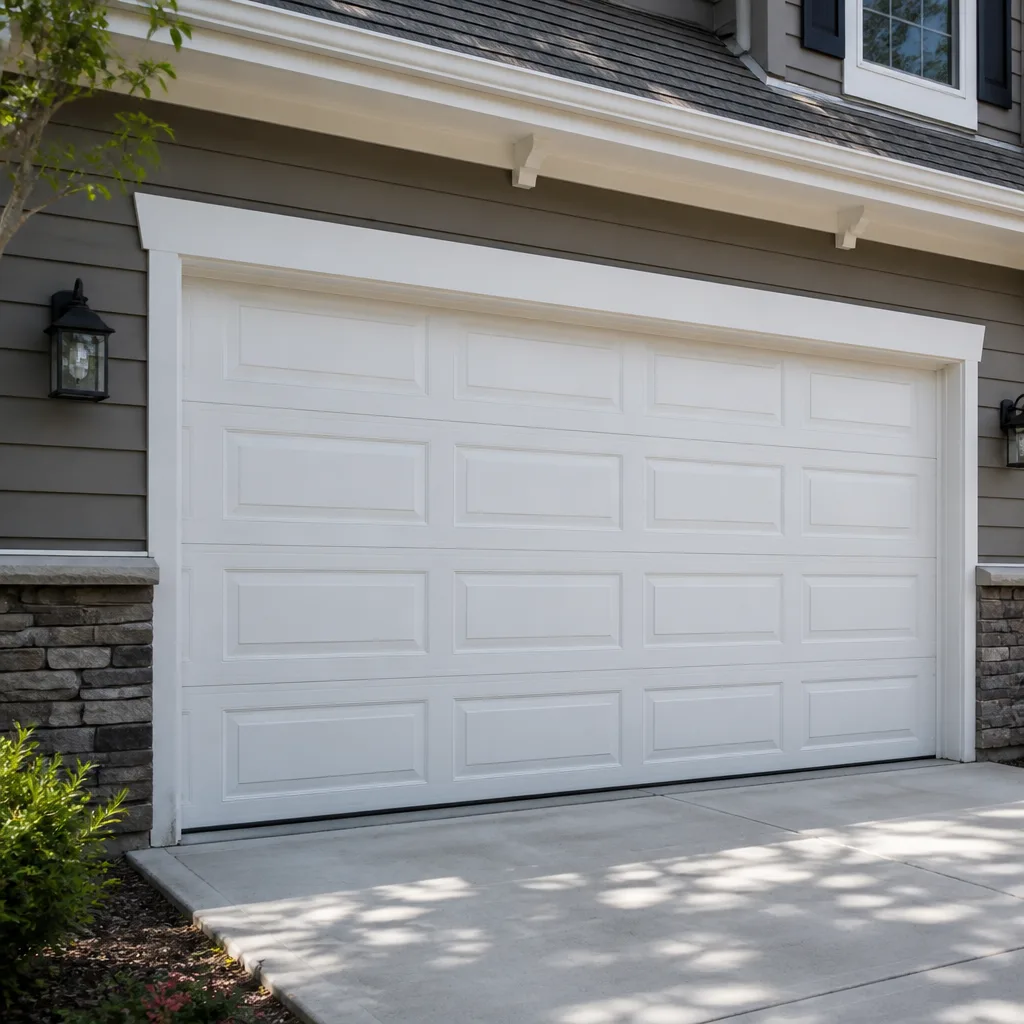 Raised-panel steel
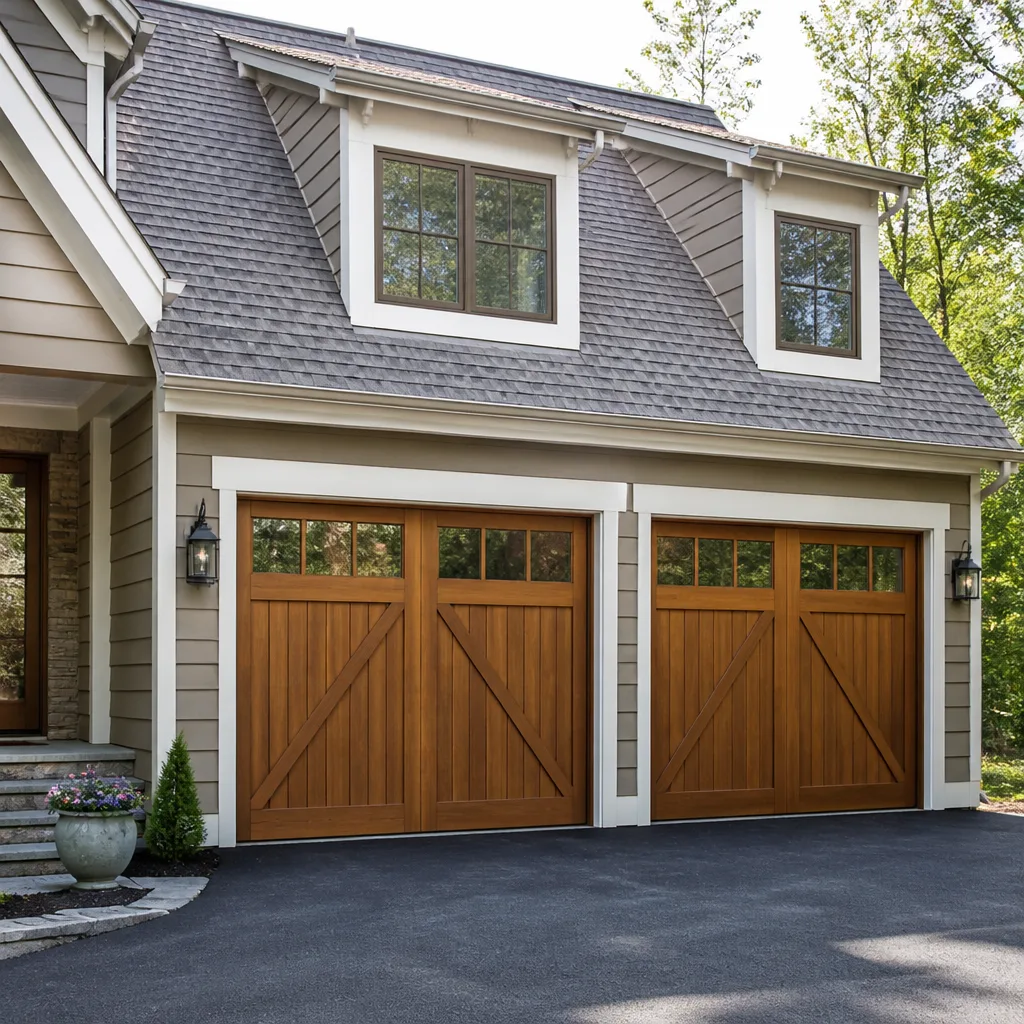 Carriage house
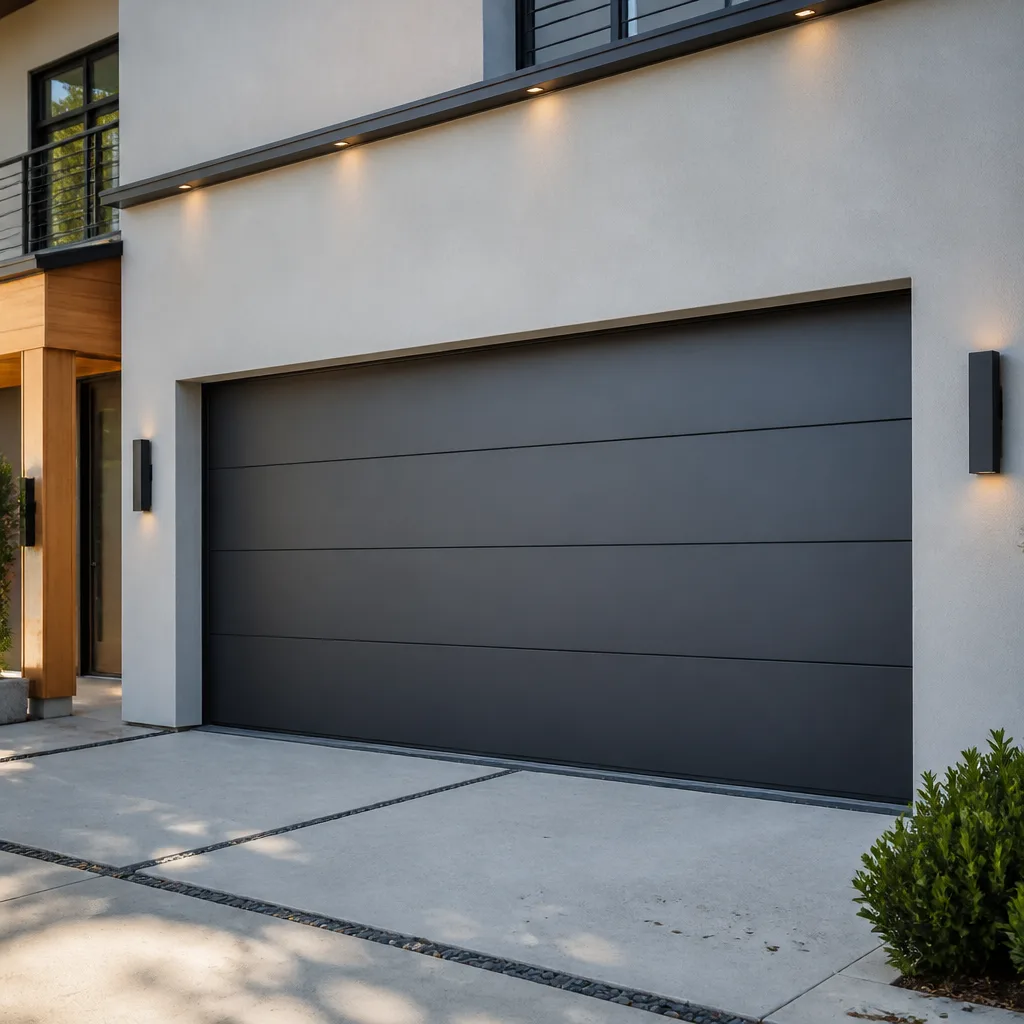 Modern flush
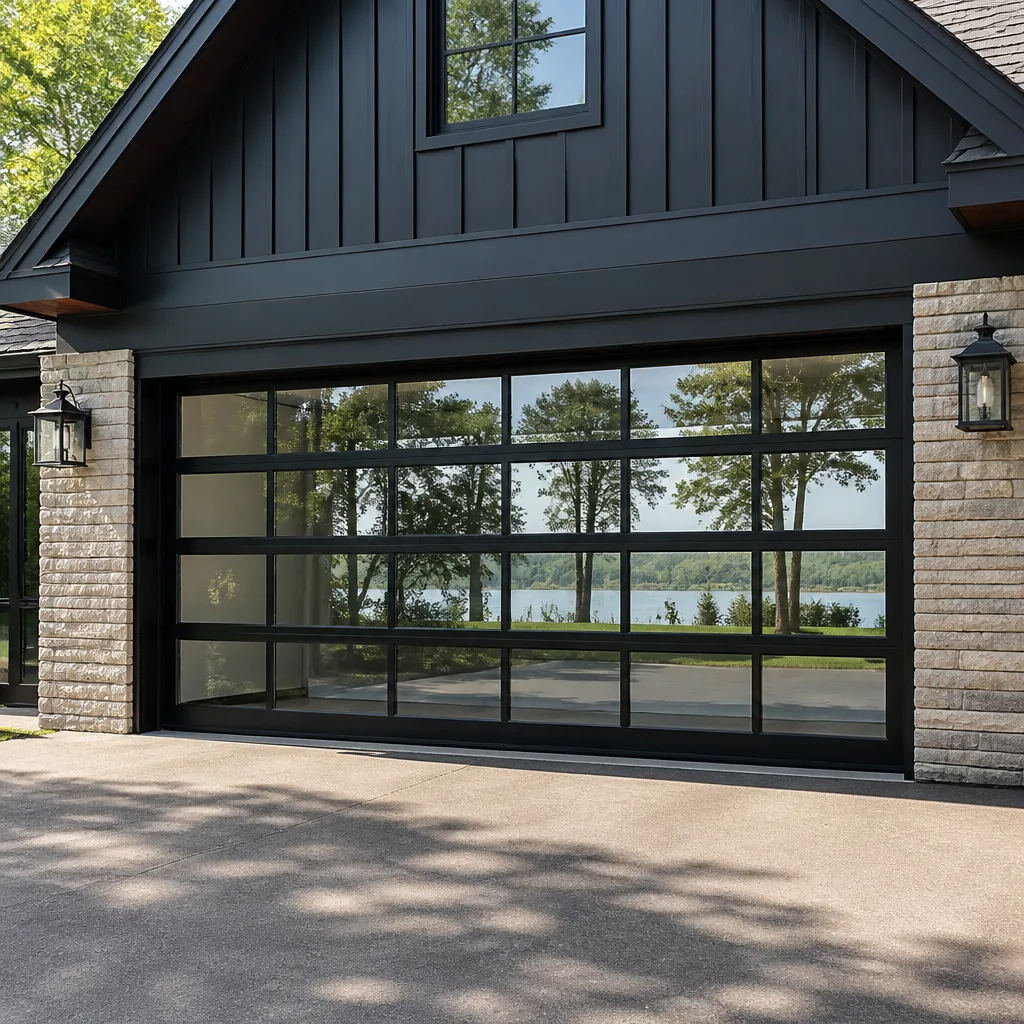 Full-view glass
 LiftMaster openers
 Chamberlain openers
Full 25-point door and opener safety check with every visit - springs, cables, rollers, tracks, and your LiftMaster or Chamberlain opener included
You get a price before we start. It does not change when the pro arrives.
Get your free estimateGarage Door Warning Signs: A Fall River Homeowner’s Reference Guide
Most garage doors in Fall River don’t fail out of nowhere. They warn you first – with a grind, a shudder, a hesitation on the way up – and most homeowners miss the warning because they don’t know what they’re hearing. The grinding noise that shows up one morning usually isn’t the opener getting old. It’s more often a roller bearing starting to seize, and that’s a small fix right up until the cable or spring lets go and it’s a different call altogether. A slow door, an uneven door, a door that reverses for no reason: each of those points to a specific part, and some matter this week while others can wait until next month. This guide decodes what your door is telling you in Fall River.
Quick Answer
The most important garage door warning signs in Fall River are grinding or squealing, a door that shudders or runs unevenly, slow movement, a door that reverses on its own, and visible rust or fraying on springs and cables. Grinding usually means a worn roller or dry hinge, while an uneven or slamming door often points to a failing spring or a cable problem. Anything involving a spring or cable under tension is a stop-using-it sign, not a wait-and-see sign.
Styles & brands we work with
- Raised-panel steel
- Carriage house
- Modern flush
- Full-view glass
- LiftMaster openers
- Chamberlain openers
Table of Contents
- What the Sounds Are Telling You: Grinding, Squealing, and Banging
- Movement Warning Signs: Shuddering, Slow Travel, and Uneven Doors
- Spring Problem or Cable Problem? How to Tell Without Touching Either
- Visual Signs That Predict Failure: Rust, Fraying, and Worn Tracks
- Your Opener as a Diagnostic Tool
- Severity Ranking: Call This Week vs. Stop Using the Door
- Why Fall River Doors Act Up in Certain Seasons
- A Short Monthly Checklist for Fall River Homeowners
What the Sounds Are Telling You: Grinding, Squealing, and Banging
A garage door is a mechanical system with a handful of moving parts, and each part fails with its own sound. Learning to separate them is the fastest way to know whether you’re looking at a $40 fix or a much bigger job. Here’s what we listen for when a Fall River homeowner describes a noise over the phone.
- Grinding: Usually a roller bearing that’s drying out or seizing, or a hinge that’s lost its lubrication. It starts quiet and gets louder over weeks. Catch it early and it’s a roller and hinge replacement. Let it run and the extra strain works its way into the cable and track.
- Squealing: Metal-on-metal contact, often from dry hinges, rollers, or a torsion tube that needs lubrication. It’s the least urgent of the sounds, but it’s the easiest to fix before it becomes something else.
- Banging or popping: A loud pop, especially when the door is opening, often means a torsion spring has snapped. Stop using the door and call for garage door spring repair. Running the opener on a door with a broken spring can damage the opener motor and the door panels.
- Rattling: Loose bolts, a worn bottom bracket, or a track that’s worked loose from its mounting. Worth tightening, but it can also signal a track that’s out of alignment.
The pattern matters. A noise that shows up only at one point in the door’s travel often points to a specific roller or track section. A noise that’s constant points to a system-wide problem like lubrication or a worn spring. If you’re hearing a grind that’s getting worse week over week, that’s a strong signal to have garage door repair looked at before it turns into something on the emergency list.
Movement Warning Signs: Shuddering, Slow Travel, and Uneven Doors
How your door moves tells you almost as much as how it sounds. A door that runs smooth and level is a door in good shape. A door that shudders, slows down, or travels at an angle is telling you something in the system is under strain or out of balance. In Fall River, where plenty of homes have older doors that have been through a lot of temperature swings, movement problems are common and often the first sign a homeowner notices.
- Shuddering or shaking: Usually a bent or misaligned track, a worn roller, or a door that’s come out of balance. If the door shakes hard enough to rattle the frame, stop and have it checked.
- Slow or labored travel: A door that used to open in seconds and now takes noticeably longer is fighting resistance. That resistance could be a failing spring, a binding track, or an opener that’s losing power. It’s rarely just the opener aging.
- Uneven travel: One side rising ahead of the other means the door is out of balance, usually from a spring problem or a stretched cable on one side. This is the sign that most often turns into a stuck door.
- Slamming shut: If the door drops the last few inches instead of settling, the spring tension is off or the spring is broken. A slamming door can damage the bottom panel and the opener.
Movement problems are the hardest to diagnose by ear because the door is still doing what you asked – it’s just doing it badly. That’s exactly when a trained eye saves money. A technician can tell within a minute whether the fix is a roller, a spring, or the opener, and having a technician with up to 11 years of experience on the call means fewer return visits for the same problem.
Spring Problem or Cable Problem? How to Tell Without Touching Either
Springs and cables are the two parts of a garage door that can seriously hurt you, and both are under heavy tension every time the door moves. You can tell which one you’re dealing with from the ground, without touching either. Here’s the safety-first version: don’t try to adjust, tighten, or replace a spring or cable yourself. Look, listen, and call.
Spring problems usually show up as a door that feels heavy to lift by hand, a door that won’t stay open at the halfway point, or a loud pop followed by a door that won’t open at all. A torsion spring on a door near the ceiling has a visible gap along the coils if it’s snapped. An extension spring along the side track will hang loose or look stretched. When a spring goes, the door’s weight has no counterbalance, so the opener is doing all the lifting and will strain or fail next.
Cable problems usually show up as a door that’s unlevel, a door that’s stuck partway, or a cable that looks slack or frayed along the drum at the top corner. A snapped cable often makes a whipping sound and leaves the door cocked to one side. Frayed strands along the cable are an imminent failure. Both are top-priority garage door repair calls, and both are jobs for a trained technician with the right tools and replacement parts, not a weekend project.
Here’s the difference that matters: a spring failure is often a slow decline (the door gets heavier and slower, then one day it won’t lift). A cable failure is often sudden, and the door can drop. Both are reasons to stop using the door until someone looks at it.
Visual Signs That Predict Failure: Rust, Fraying, and Worn Tracks
Some of the most useful warning signs are visual, and they show up well before the door fails. A five-minute walk-around once a month catches most of them. Here’s what to look at and what each sign means.
- Rust patterns on springs: A few spots are normal. Heavy rust along the coils means the metal is weakening and the spring is closer to failure than you’d guess. New England’s wet winters and summer humidity speed this up, so rust is one of the more common visual signs in Fall River.
- Fraying cable geometry: Look at the cables that run along the sides. They should be tight and straight. Frayed strands, a cable that’s crossed over itself on the drum, or a cable that’s hanging loose all mean the cable is on its way out.
- Worn roller tracks: The track should be straight and free of dents or bends. A track that’s pulled away from its mounting, or a roller that’s worn flat, causes the door to shake and grind.
- Cracked weatherstripping at the bottom corners: The rubber seal at the bottom of the door often cracks first at the corners. A bad seal lets in water and cold air, and it also lets in pests. It’s a small fix that protects the door panels from water damage over time.
- Dents and cracks in the panels: A cracked panel, especially near a hinge, weakens the door’s structure and can cause it to bind. On older steel doors, dented panels also tend to be the first place rust starts.
If you see rust on the spring and fraying on the cable at the same time, that’s a door that’s telling you it’s near the end of its service life for those parts. That’s when a technician should look at the whole system, not just the one part that’s visibly worn.
Your Opener as a Diagnostic Tool
Your opener isn’t just the thing that lifts the door – it’s also a diagnostic tool. How it behaves when you press the button tells you a lot about what’s wrong and where.
- Hesitation before the door moves: The opener is straining against resistance. That resistance is usually a binding track, a worn roller, or a spring problem. The opener isn’t the root cause here; it’s the messenger.
- Reversing or stopping partway: The opener’s safety sensors or force settings are triggering. Sometimes a sensor is misaligned, sometimes the door is binding hard enough that the opener thinks it hit something. Either way, don’t override it – fix the cause.
- Remote inconsistency: A remote that works one day and not the next, or that only works when you’re close, often points to a failing battery, a bad wall control, or a logic board issue. If the wall button works but the remote doesn’t, the problem is usually in the remote or the receiver, not the door.
- Opener runs but the door doesn’t move: The opener is working, but the door isn’t. That’s usually a broken spring, a snapped cable, or a stripped gear in the opener itself. Stop and call.
Brand matters here. A LiftMaster, Chamberlain, Genie, or Craftsman opener each has its own quirks and diagnostic codes, and a technician who knows the brand diagnoses faster and gets the right part the first time. That’s part of why we work on eight major brands – the technician on your call already knows your system, whether the door is a Clopay, an Amarr, a Wayne Dalton, or a Raynor. If the opener is the problem, garage door opener repair can sort it out without guesswork.
Severity Ranking: Call This Week vs. Stop Using the Door
Not all warning signs are equal. Some mean the door is fine to use for now and just needs a service. Others mean stop using it. Here’s how we rank them.
- Stop using the door until it’s fixed: A snapped spring, a snapped or frayed cable, a door that’s off its track, a door that drops or slams, and any door where you can see a gap in the torsion spring. These are safety and structural failures. Running the door can cause a panel to fail or the opener to burn out, and a door that drops is a serious risk to anyone underneath it.
- Call within the week: Grinding that’s getting louder, a door that shudders or runs unevenly, a door that reverses on its own, a door that’s noticeably slower than it used to be, and visible rust along the spring. These are problems that will get worse, and most of them are cheaper to fix now than after they turn into a stop-using-it call.
- Call within the month: A squeal, a rattle, a worn bottom seal, a remote that’s inconsistent, and minor rust spots on the hardware. These are service items. They won’t cause a failure tomorrow, but they’re the small fixes that keep the bigger ones from happening.
If you’re not sure which category your door is in, that’s the moment to call. A technician can tell you in a few minutes whether the door is safe to use while you wait for a repair appointment or whether it needs to stay down until the fix. In Fall River, a door that won’t close is a security issue as much as a convenience one, which is why we treat it as an emergency call.
Why Fall River Doors Act Up in Certain Seasons
Garage doors are outdoor equipment bolted to an indoor space, and the weather here moves them around more than most homeowners expect. Fall River gets cold winters, wet springs, and muggy summers, and each season stresses a different part of the system.
Cold snaps are hard on springs. Metal contracts in the cold, and a spring that was already weak is more likely to snap on the first really cold morning of the year. Lubrication also thickens in the cold, so a door that was quiet in October can start grinding in January. If your door starts making noise in the winter, it’s often a sign that the rollers and hinges need fresh lubrication before the cold does damage.
Spring and fall bring temperature swings that cause the door’s wood or steel panels to expand and contract. That movement can shift the door slightly in its tracks, which shows up as a door that suddenly runs unevenly or rubs on one side. The wet stretches of the year are also when rust takes hold on springs and cables, especially on an older door. That’s why we tell Fall River homeowners to look at the springs and cables after the wet season, not just when the door starts complaining.
Summer humidity does its own damage. It accelerates rust and can make a wooden door swell enough to bind. If your door gets harder to close in the middle of a humid stretch, the door is telling you it’s swelling. That’s a sign to have the door checked rather than forcing it shut.
A Short Monthly Checklist for Fall River Homeowners
You don’t need to be handy to keep tabs on your garage door. A five-minute monthly check catches most of the warning signs before they turn into repairs. Here’s what to do, in order.
- Watch and listen to the door once, start to finish. Stand outside the door’s path and watch it open and close. Note any grind, squeal, shudder, or hesitation.
- Look at the springs. From the ground, check for gaps in the torsion spring or stretched extension springs. Rust along the coils is a warning sign.
- Look at the cables. Check both sides for frayed strands, slack, or a cable that’s crossed over itself.
- Check the tracks. Run your eyes down both tracks for dents, bends, or a track that’s pulled away from the frame. Don’t try to bend a track back yourself – have it done.
- Check the bottom seal. Look at the weatherstripping along the bottom of the door, especially the corners. Cracks or gaps mean it needs replacing.
- Test the safety reverse. Put a small object in the door’s path and close the door. It should reverse when it meets the object. If it doesn’t, the opener needs attention.
- Test the balance. With the door closed and the opener disconnected (following the opener’s manual), lift the door halfway and let go. A balanced door stays put. A door that falls or rises on its own is out of balance.
If anything in that checklist fails, make a note and call. It’s better to have a technician look at a door that’s still working than to wait for the day it isn’t.
Common Mistakes to Avoid
- Ignoring a noise because the door still opens. A grinding door that still opens is a door that’s using up its remaining life. The fix is smaller now than it will be in a month.
- Trying to lubricate or adjust a spring or cable. Springs and cables are under lethal tension. Lubricating the tracks and hinges is fine; touching the spring or cable is not. Leave those to a trained technician with the proper tools.
- Assuming the opener is always the problem. A door that’s slow or reverses is usually telling you about the door, not the opener. Replacing the opener on a door with a failing spring just strains the new opener.
- Forcing a stuck door open or closed. If the door is off its track or the cable is slack, forcing it can bend panels, break the opener, or drop the door. Stop and call.
- Painting over rust on a spring. Paint hides the rust but doesn’t stop the metal from weakening. A rusted spring is a spring to replace, not to cover up.
- Waiting for the door to fail completely before calling. A door that fails on a day you need out of the driveway is a bigger problem than a small repair you scheduled a week ahead.
- Using a general handyman for spring work. Spring replacement is one of the most dangerous DIY repairs in home maintenance. It belongs to a technician with the right tools and replacement parts, not a generalist.
See the difference
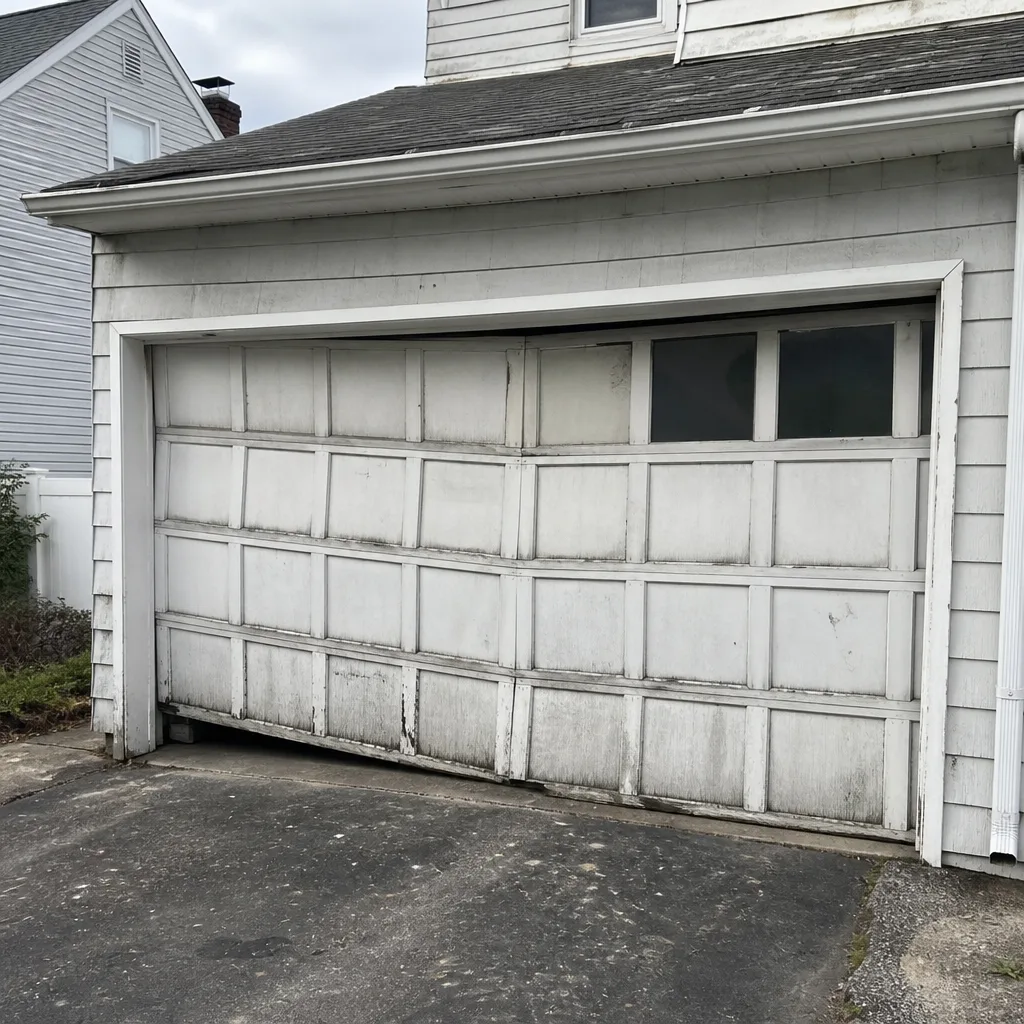 Before
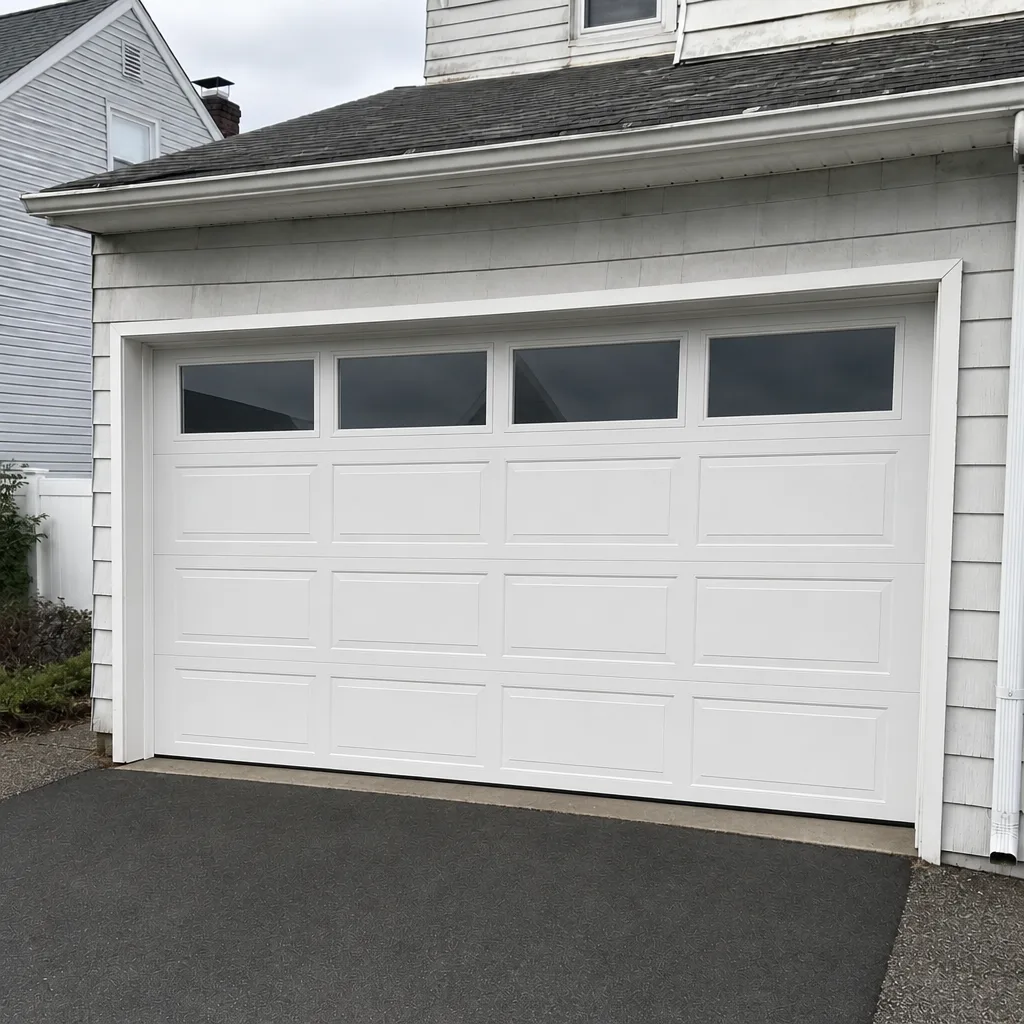 After
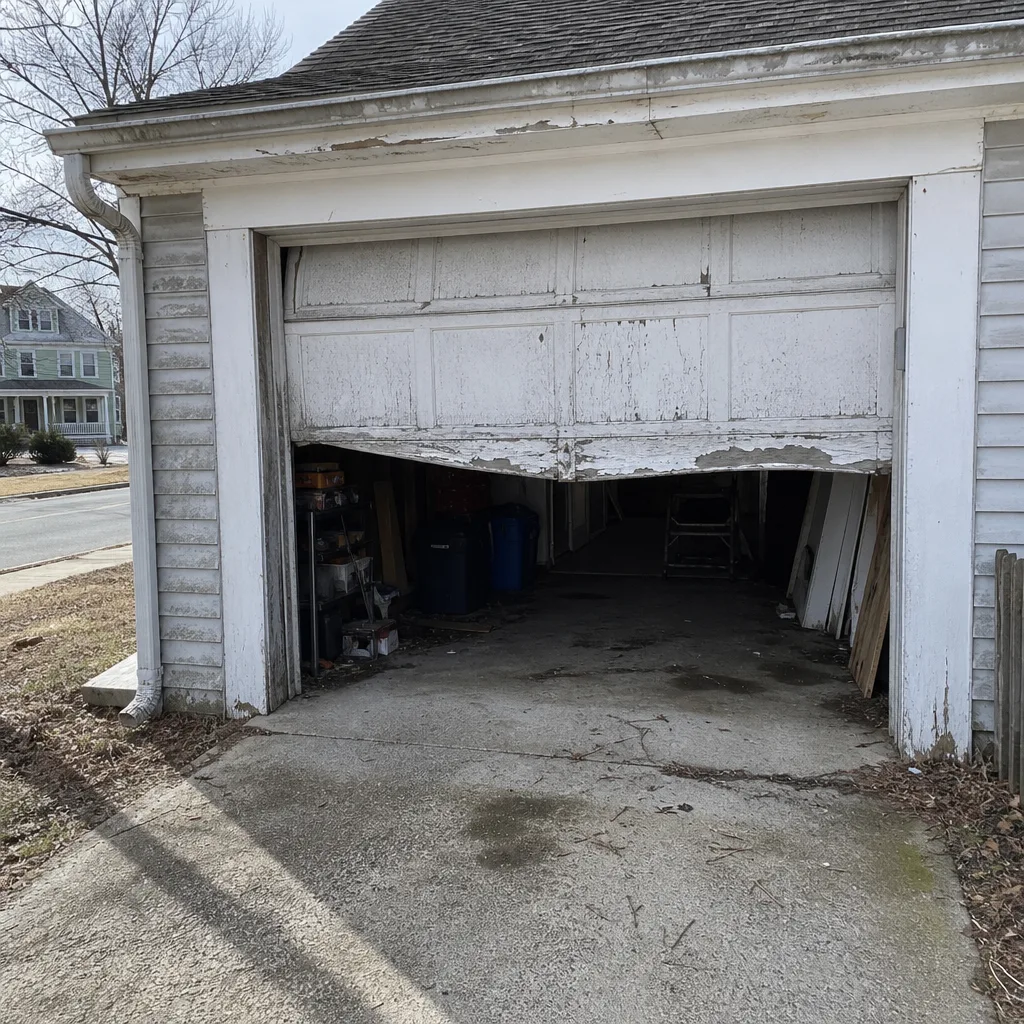 Before
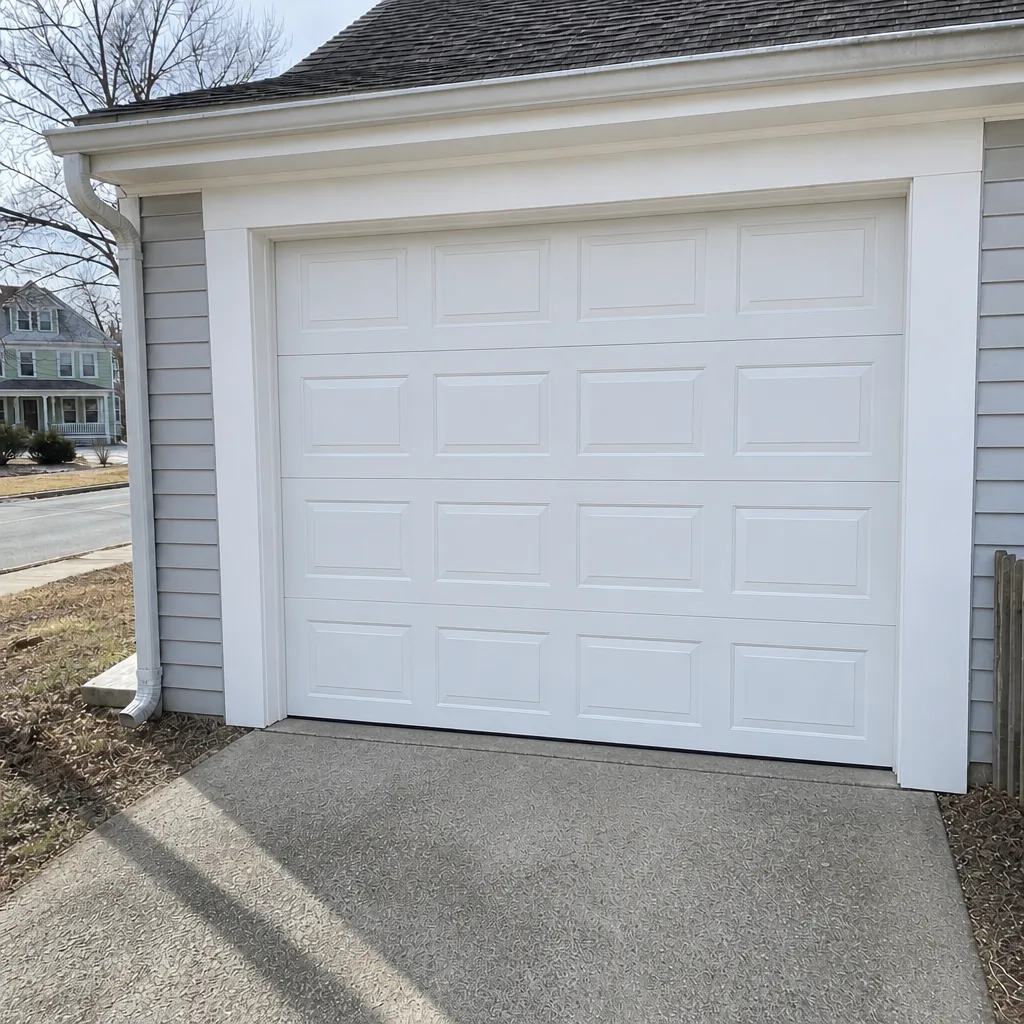 After
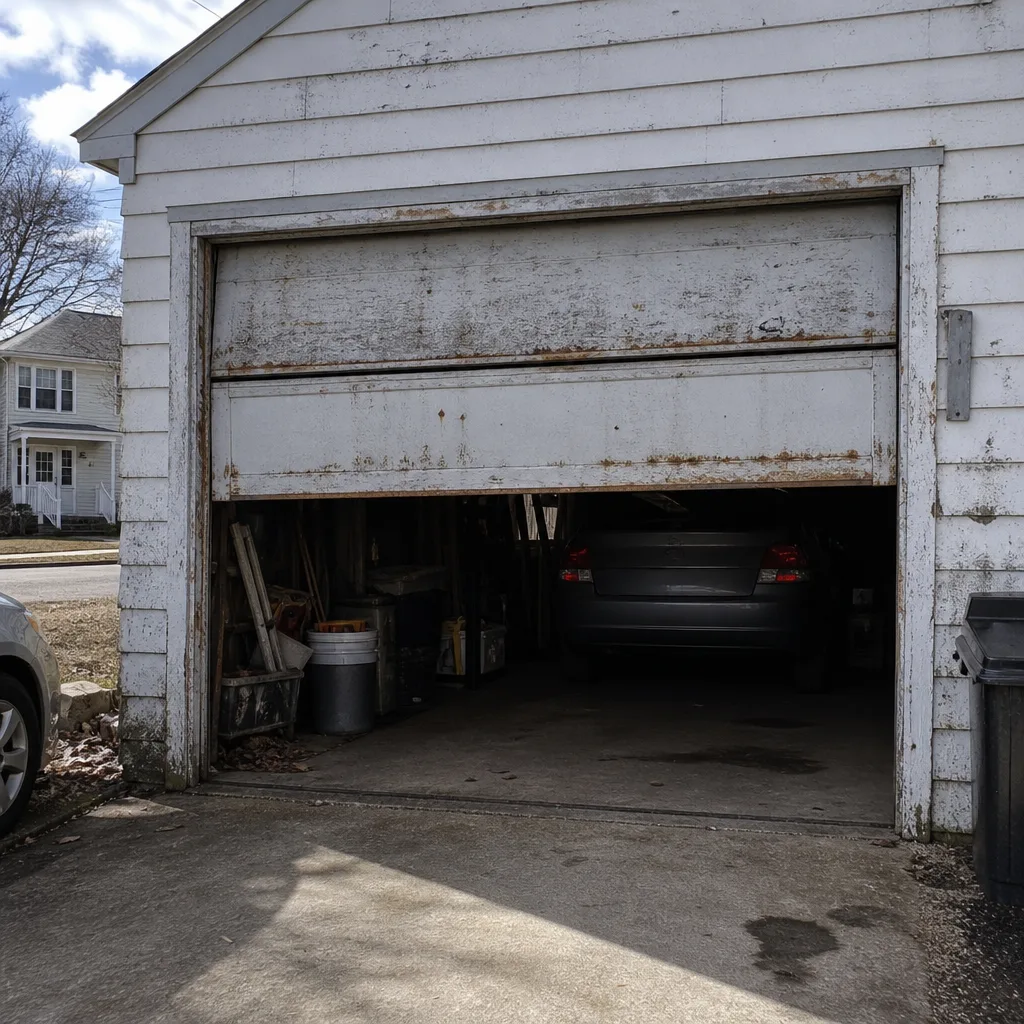 Before
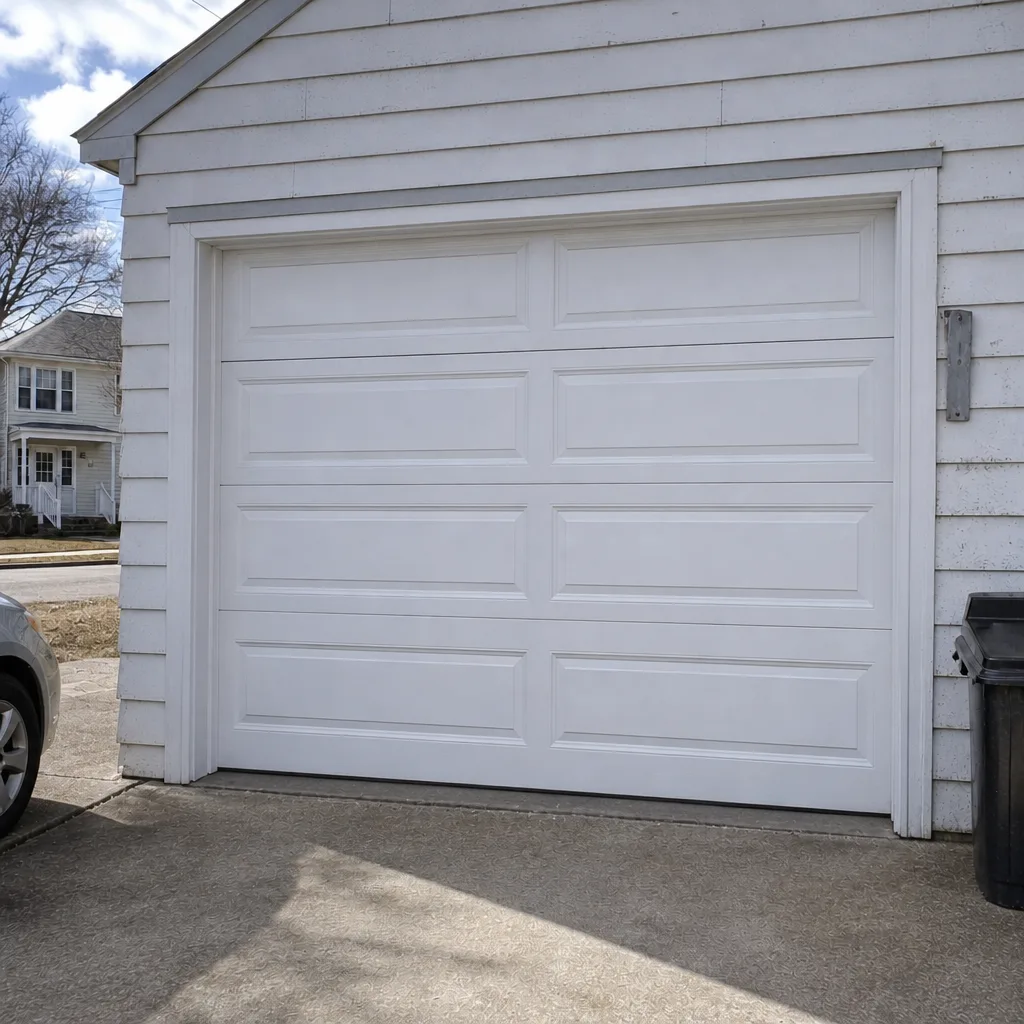 After
When to Call a Professional
Call for a professional when the door makes a sound that’s getting worse, when it moves unevenly or slowly, when you can see rust on a spring, fraying on a cable, or a gap in the torsion spring, or when the door reverses on its own. Call immediately when a spring or cable snaps, when the door is off its track, or when the door won’t close – those are safety and security calls, and we treat them as emergencies. A door that’s stuck open or won’t close in Fall River leaves the house exposed, and that’s not a wait-until-next-week situation. If you’re not sure which category your door is in, call and describe what you’re seeing and hearing. Fall River Garage Door Repair Co offers free estimates in Fall River – call (866) 819-6714 and one of our technicians will tell you whether to book a repair or keep the door down until we get there.
Frequently Asked Questions
A snapped spring, a frayed or snapped cable, or a door that reverses on its own is the most serious warning sign. All three are safety issues, and the door should stay down until a technician looks at it. A door that drops or slams is also in that category. Call right away if you see any of them.
Spring problems usually show up as a door that suddenly feels heavy, a door that won’t stay open halfway, or a visible gap in the torsion spring. Cable problems usually show up as a door that’s unlevel, a cable that’s slack or frayed along the drum, or a door that’s stuck partway. Both are under lethal tension, so the answer is the same: don’t touch either, and call for repair.
Grinding is often a worn roller bearing or a dry hinge, and that’s a small fix when it’s caught early. The problem is that grinding left alone works its way into the cable and track, and that’s when it becomes a bigger job. Call early and it usually stays minor. Call late and it often doesn’t.
A door that won’t close is an emergency call for us, because it leaves the house exposed. Call (866) 819-6714 and describe what the door is doing. We’ll get a technician out to look at it and give you a free estimate before any work starts.
Once a year is a reasonable baseline for a Fall River door, and more often for an older door or one that gets heavy daily use. Servicing is mostly lubrication, balance checks, and tightening, and it’s the cheapest way to keep a spring or cable from failing at the worst time. A door that’s making noise or running rough should be serviced sooner.
Most repairs are done in a single visit. Rollers, hinges, openers, and cables are routine same-day repairs. Springs are often replaced in the same visit when the correct replacement part is on hand. A door that needs new panels or a full replacement is measured and scheduled, and we’ll give you a written price before any work starts so the invoice matches the estimate.
The Bottom Line
Your garage door is a system, and it warns you before it fails. Sounds, movement, and visual cues each point to a specific part, and learning to read them is the difference between a small repair and a big one. A grind is usually a roller; a shudder is usually balance; rust on the spring means the spring is on its way out. Springs and cables are the urgent category – stop using the door if either one looks wrong. Everything else can usually be scheduled. If you’re in Fall River and your door is telling you something, don’t wait for it to become an emergency. Call Fall River Garage Door Repair Co at (866) 819-6714 for a free estimate, and we’ll tell you exactly what your door needs.
Written by the team at Fall River Garage Door Repair Co.