Last updated November 22, 2026
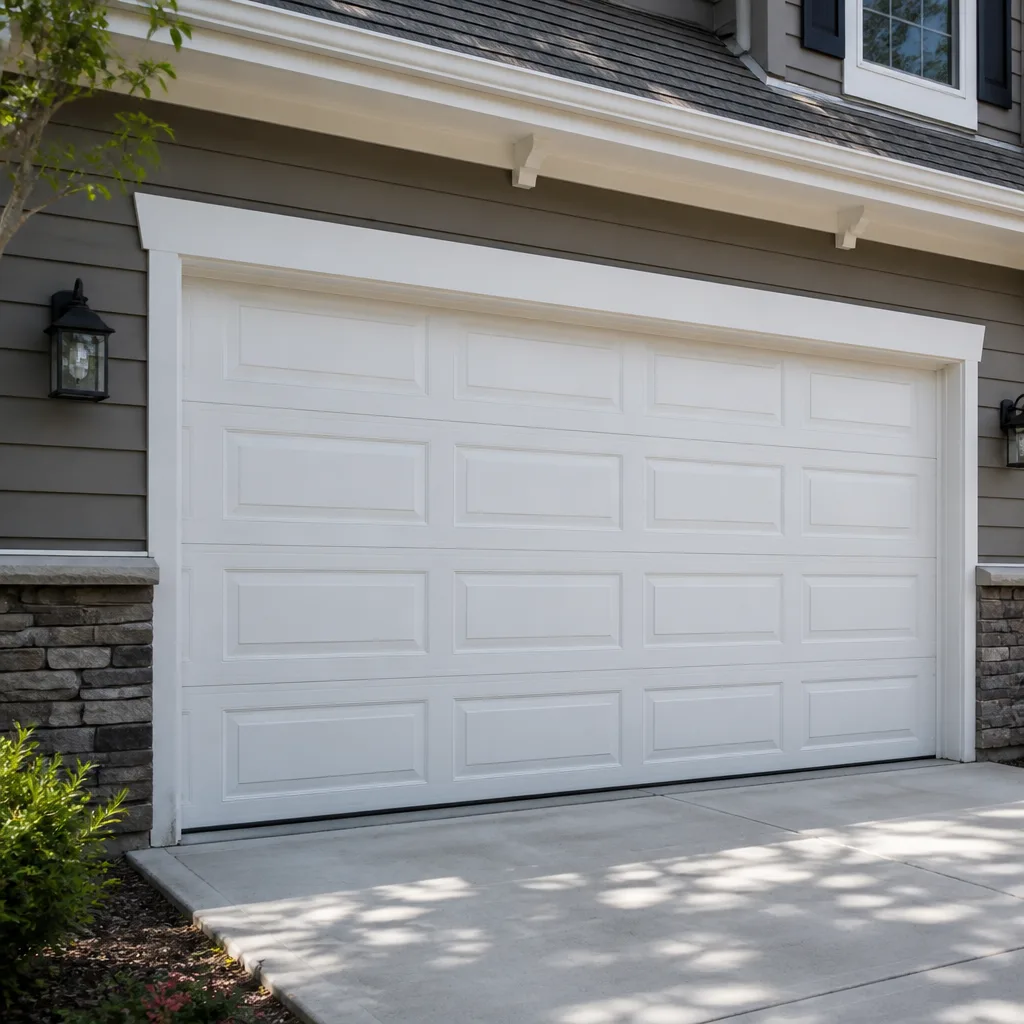 Raised-panel steel
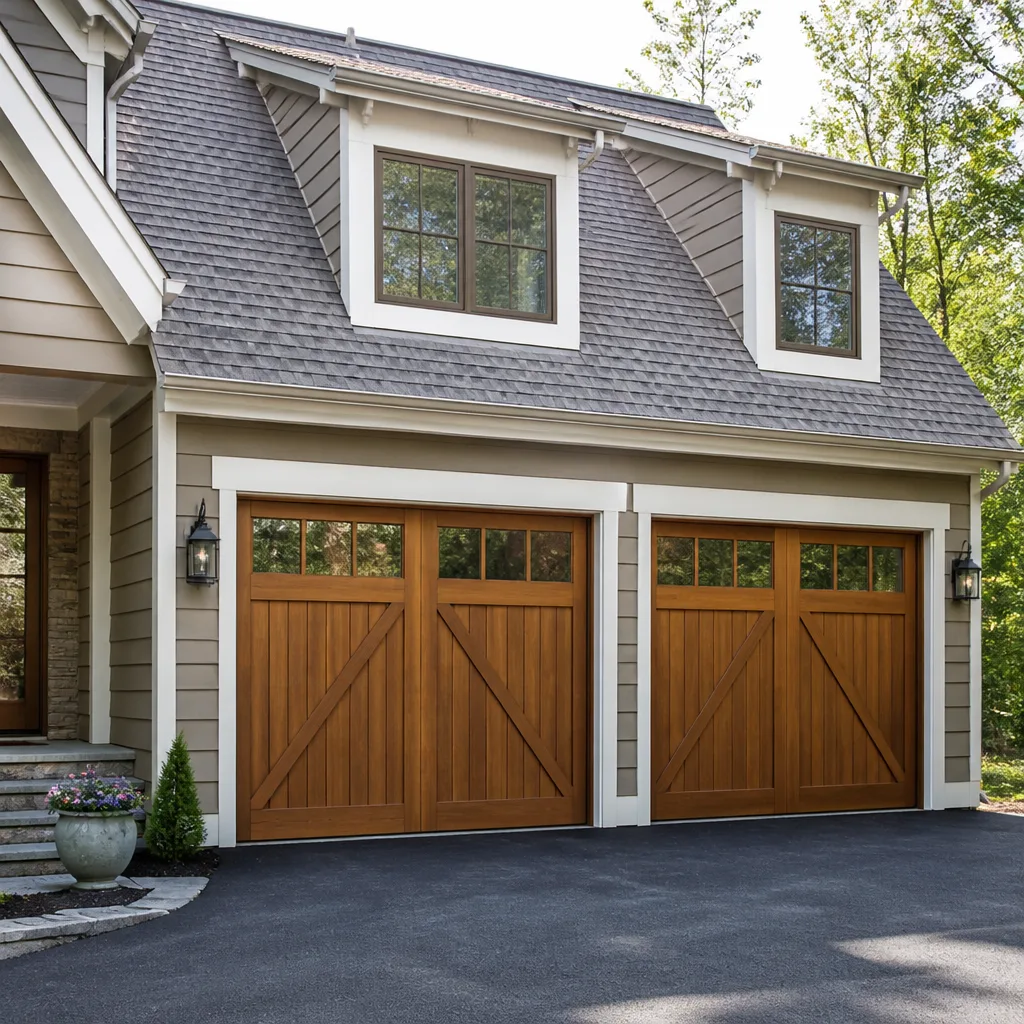 Carriage house
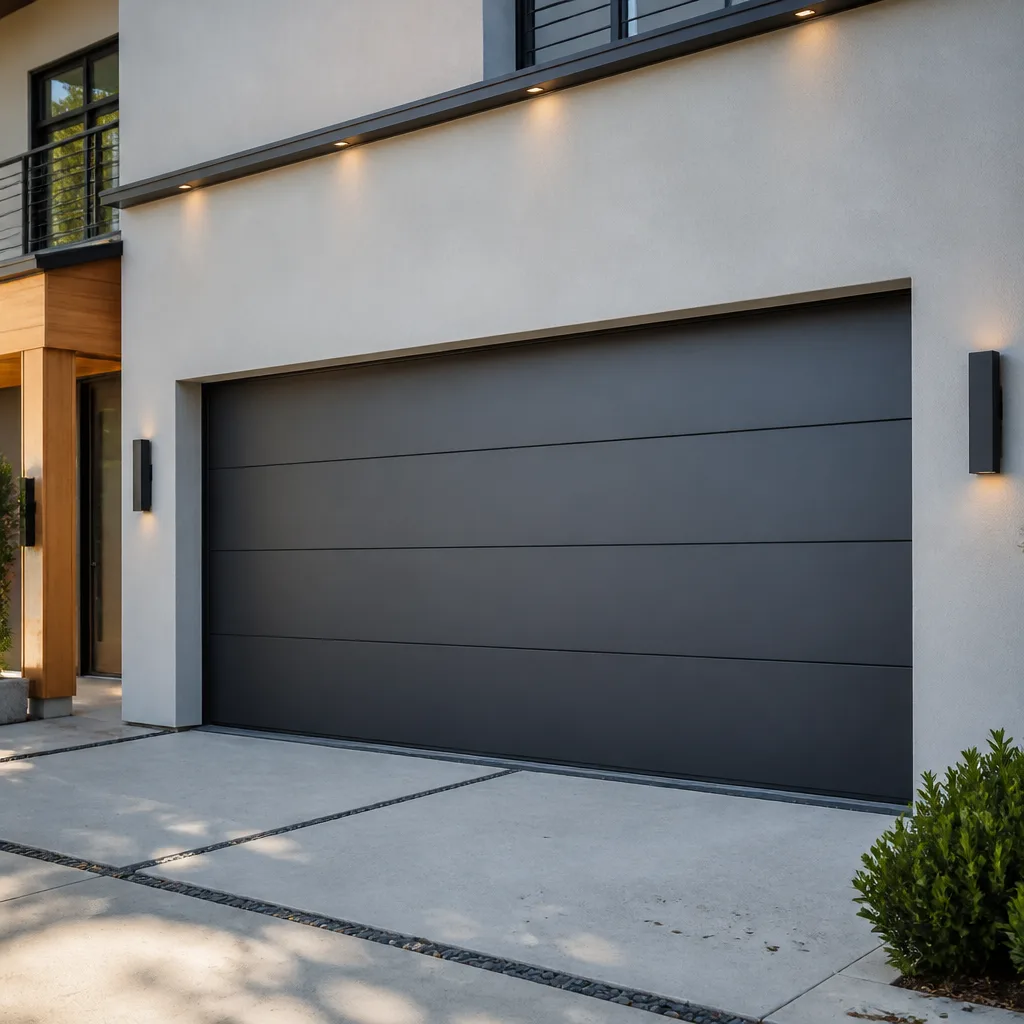 Modern flush
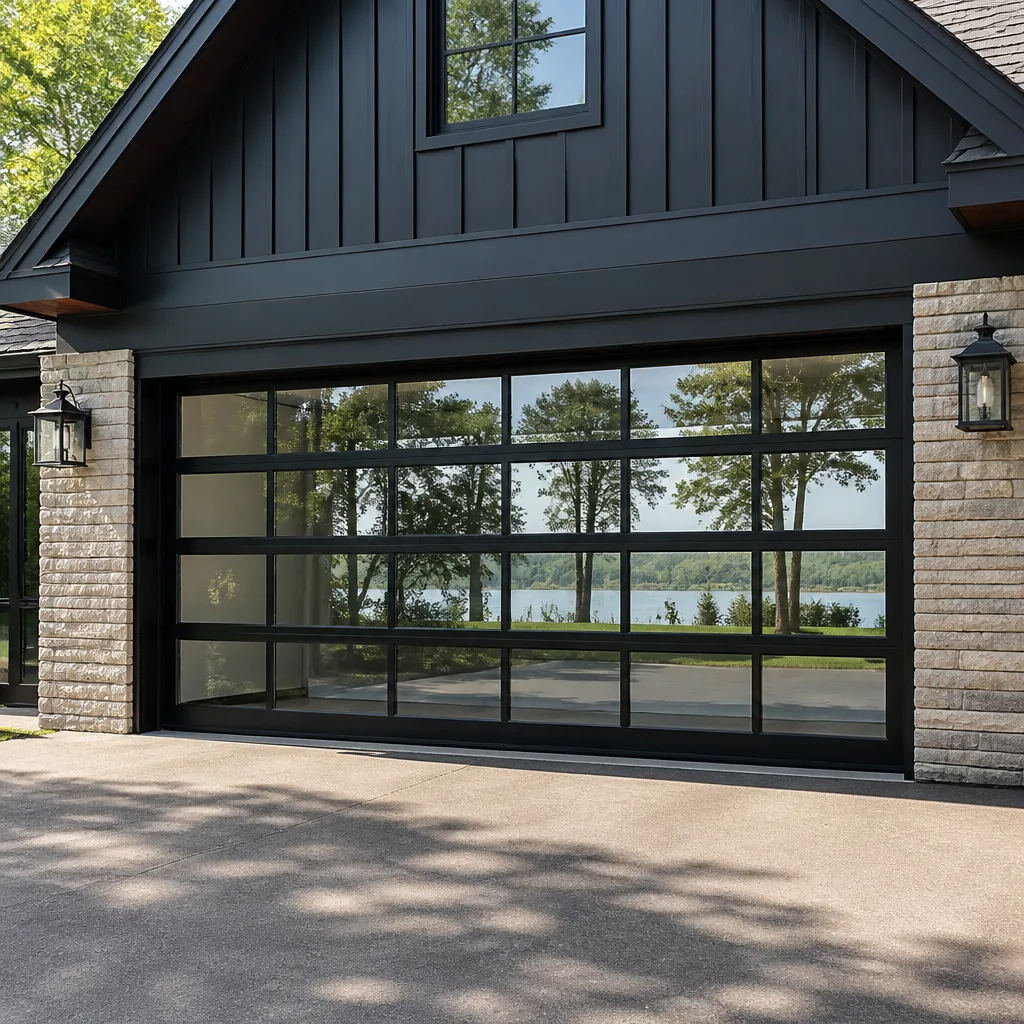 Full-view glass
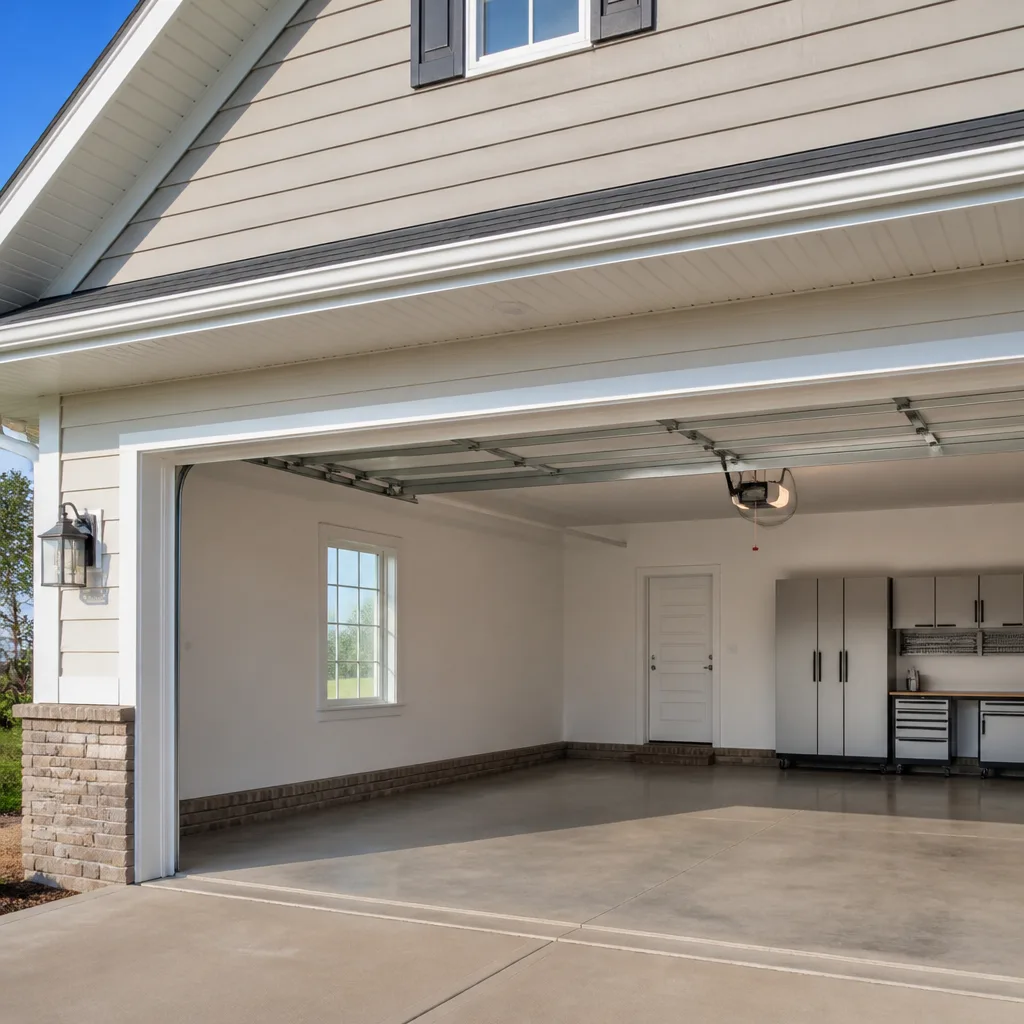 LiftMaster openers
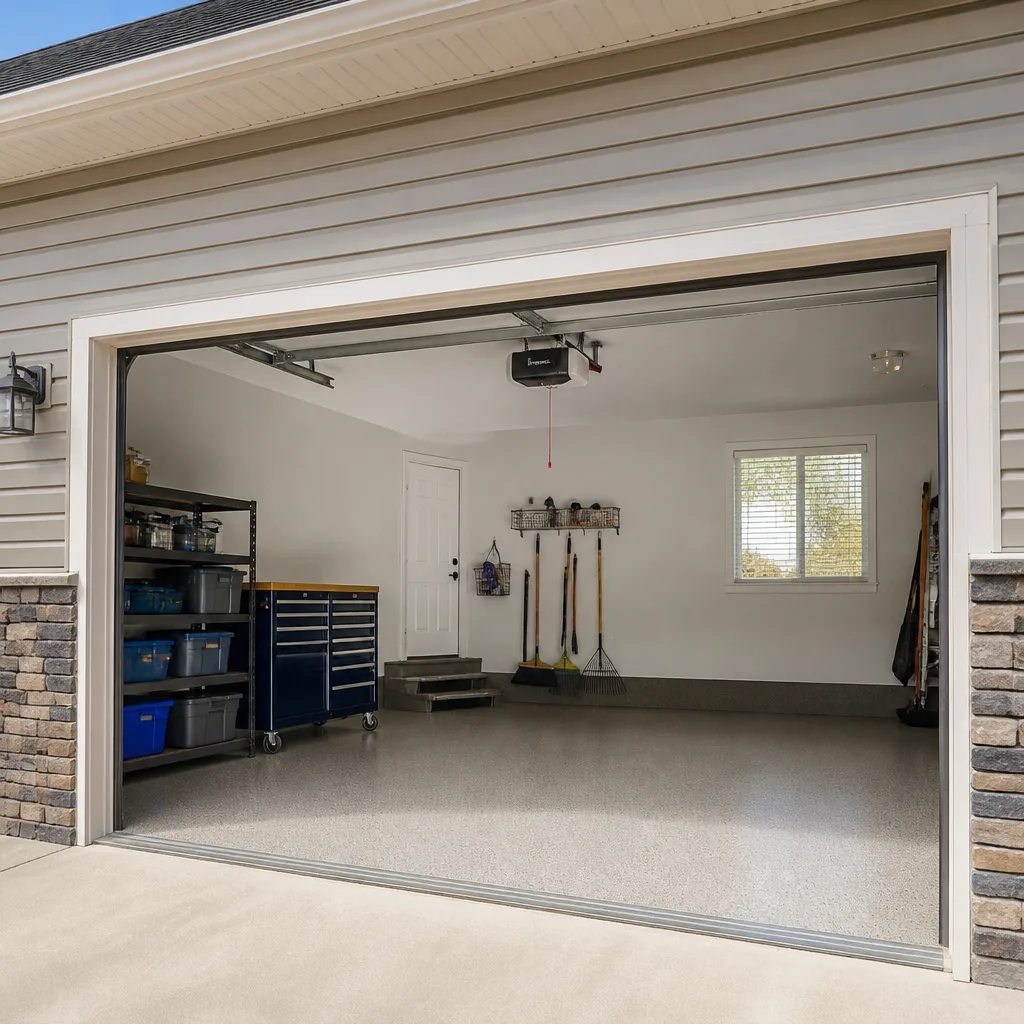 Chamberlain openers
Full 25-point door and opener safety check with every visit - springs, cables, rollers, tracks, and your LiftMaster or Chamberlain opener included
You get a price before we start. It does not change when the pro arrives.
Get your free estimateDIY vs Professional Garage Door: The Fall River Homeowner’s Decision Guide
The garage door DIY conversation usually goes wrong at the second sentence. Someone says “I’m pretty handy,” and everyone around the table nods, and that confidence becomes the whole argument. It shouldn’t be. Handiness doesn’t touch a wound torsion spring carrying hundreds of pounds of stored energy, and it doesn’t stop a decoupled cable from whipping across a garage. The line between what you can safely do yourself and what needs a trained technician isn’t drawn by confidence. It’s drawn by what’s inside the part. This guide draws that line for Fall River homeowners, task by task, so you know exactly where your own work should end.
Quick Answer
You can safely handle weatherstripping, lubrication, photo-eye alignment, remote and keypad programming, and light cleaning on almost any garage door. You should not touch torsion or extension springs, cables, bottom brackets, or track work on a door under tension. Those parts store enough energy to seriously injure or kill an experienced person, and they belong to a trained technician. Everything in between (rollers, hinges, single panels, opener adjustments) depends on the specific hardware, and the task-by-task breakdown below sorts it out.
Styles & brands we work with
- Raised-panel steel
- Carriage house
- Modern flush
- Full-view glass
- LiftMaster openers
- Chamberlain openers
Table of Contents
- Why Springs Are Not a “Be Careful” Repair
- The DIY-Safe List: Tasks You Can Do This Weekend
- The Professional-Only List: Where the Energy Lives
- The Middle Ground: Rollers, Panels, and Bottom Brackets
- Where DIY Saves Money and Where It Costs More
- What Tools and Knowledge Actually Qualify You
- How to Describe a Problem So You Skip the Diagnosis Fee
- What Fall River Doors Go Through
Why Springs Are Not a “Be Careful” Repair
A torsion spring isn’t a stiff part you can muscle through. It’s a spring wound to a specific number of turns that holds the full weight of the door in balance. A typical residential door weighs well over a hundred pounds, and the spring stores that weight as rotational force. The energy is live whenever the spring is wound, which is whenever the door is on its tracks and working. A torsion spring can carry something on the order of 150 pound-feet of torque when fully wound. When it lets go, that energy releases in a fraction of a second, not gradually.
That’s the physics reason this repair doesn’t respond to caution. There is no safe way to “take it slow” on a wound spring, because the failure mode isn’t gradual. The danger is a sudden release, and the winding bars are the only thing between the technician and that release. Homeowners who attempt it use screwdrivers or vise grips, and those tools slip out of the winding cone. When they do, the spring uncoils against whatever is in the path. This is why torsion spring work sends people to the emergency room even when they were being careful. The problem isn’t carelessness. The problem is that the stored energy doesn’t negotiate.
Extension springs carry the same logic in a different geometry. They stretch along the top of the door and store tension the same way, and when they break they travel. On older doors without safety cables running through the spring, a broken extension spring becomes a projectile. Even with cables, replacing one means releasing the tension deliberately, and that release has to be controlled. We handle garage door spring repair with the proper winding bars and the door secured, because there’s no version of this job where the right tool is optional.
The DIY-Safe List: Tasks You Can Do This Weekend
Most of what a garage door needs between major repairs is well within reach for a homeowner with basic tools and a ladder. These tasks don’t involve stored spring energy, and getting them wrong costs a few dollars, not a finger.
- Weatherstripping and bottom seals. The rubber seal along the bottom of the door and the strips around the frame keep rain and cold out. They wear, crack, and pull loose. Replacing them is a screwdriver-and-utility-knife job, and a fresh seal noticeably quiet the door and cuts drafts.
- Lubrication. Rollers, hinges, and the torsion spring itself (with a proper garage door lubricant, not WD-40) benefit from a light coat a couple times a year. Lubrication quiets a squeaky door and slows wear on rollers.
- Photo-eye alignment. The two small sensors near the floor on either side of the opening have to face each other. If the door reverses or won’t close, one has often been nudged. Straightening them and cleaning the lenses solves a surprising share of “broken door” calls.
- Remote and keypad programming. Adding a remote or changing a keypad code is a manual job. Every opener brand does it slightly differently, but the instructions are usually on the opener head or in the manual.
- Cleaning and visual inspection. Wiping down panels and looking over the hinges, rollers, and cables for obvious wear costs nothing and catches problems early.
None of these require releasing tension. That’s the whole reason they’re on this list.
The Professional-Only List: Where the Energy Lives
These repairs involve parts that are under load whenever the door is on its tracks. The list is short, and that’s the point: a small number of components hold almost all the danger in a garage door system.
- Torsion springs. The horizontal spring above the door. Carries the full weight of the door. Never a homeowner job.
- Extension springs. The springs that run along the top tracks on older doors. Same stored energy, different geometry.
- Cables. The steel cables that lift the door. They’re under tension whenever the door is balanced. A cable that snaps or slips off a drum can cause serious injury, and re-spooling one is a tension job.
- Bottom brackets. The brackets at the bottom corners anchor the cables. They’re loaded, and loosening one without releasing spring tension is how cables come free.
- Track realignment under load. Adjusting a bent track while the door is on it means working around a door that wants to move. A door that comes off the track is a heavy falling object.
If you remember one thing from this guide, remember this: any repair that involves loosening, removing, or adjusting a spring, cable, or bottom bracket is a technician’s job. We work on doors from Clopay, Amarr, and Raynor, and the first step on every one of them is the same: secure the door and release the stored tension safely before touching anything else. That step is the repair.
The Middle Ground: Rollers, Panels, and Bottom Brackets
Somewhere between “anything” and “nothing” sits a group of repairs that depend on how the door is built and how comfortable you are with heights and weight. These aren’t spring work, but they aren’t weatherstripping either.
Roller replacement is often doable for a homeowner, because rollers slide out of their hinges once the door is positioned so the roller has slack. The catch is that you have to know which position is safe and lift the door by hand to get there. If the door has a broken spring, it won’t stay up and shouldn’t be raised by hand at all.
Single panel replacement is a measure-twice job. The panel has to be the exact model and size, and steel gauge and color profile vary by manufacturer. A Clopay panel won’t drop into a Raynor door. If you’re replacing a panel from a door whose model you can identify, this is a real option. If the label is gone and the door is old, matching the panel becomes guesswork fast.
Hinge replacement on a door in working order is usually manageable. The numbered hinges (1, 2, 3, and so on, counting up from the bottom) are stamped, and replacing one with the same number is straightforward.
Bottom bracket work is not on this list. It gets grouped with spring and cable work for good reason, because that bracket holds the cable under load.
Where DIY Saves Money and Where It Costs More
The cost argument for DIY is real in some places and backward in others. Here’s the honest split.
DIY pays off on the tasks a technician would charge a minimum call-out to handle: a fresh bottom seal, a can of garage door lube, a re-aligned photo eye, a new remote. Those are small jobs where the travel and minimum charge would dwarf the parts cost. Doing them yourself is genuinely the cheaper route, and none of them carry injury risk.
DIY gets expensive on the tasks where a mistake turns a straightforward repair into a bigger one. A botched roller replacement that bends a track means paying for track work on top of the roller. A panel ordered to the wrong size is a non-refundable part and a second order. A mis-wired opener or a stripped gear can take a working opener into replacement territory. And a spring attempt that goes wrong doesn’t stop at a part cost: it means a technician now has to correct a loaded, damaged assembly rather than swap a spring cleanly, plus whatever the homeowner deals with personally. The parts on this side of the line cost more to buy the wrong way and more to fix.
When you do hire out, ask for the estimate before the work starts and confirm what it covers: the part, the labor, and any balancing adjustment. On cost-sensitive repairs like a snapped spring, the actual figure depends on whether it’s one spring or a matched pair, so get the number for your door rather than a rough guess. We quote per job and write it down, and you’ll know the price before we touch the door.
What Tools and Knowledge Actually Qualify You
“Handy” is not a qualification. Ownership of a tool set is not a qualification either. What actually qualifies a homeowner for the middle-ground work is a specific, checkable set of things.
- A winding bar. If you don’t own one, you’re not doing any spring, cable, or bottom bracket work. There is no substitute, and the absence of one is your answer.
- Knowledge of how to lock the door off. Even before you touch anything, you need to know how to secure the door so it can’t move while you work. That’s an opener-side and lock-side procedure, and getting it wrong is how people get hurt on parts that look safe.
- Identification of your door and opener brand and model. This is free and it saves real money. Clopay and Amarr doors have different panel profiles and weight; LiftMaster and Chamberlain openers have different limit settings and wiring. When you tell a technician which you have, the diagnosis starts before the truck moves.
- A ladder rated for your weight, placed on level ground, with no reach required. Most garage door injuries happen on ladders, not on the door itself.
- A willingness to stop. If a task feels like it needs a tool you don’t have, or a part you can’t identify, that’s the line. Stop and call.
The hardest one is the last. Most of the middle-ground work is achievable if you’re patient and you know when to quit. The problem is that “just a little more” is exactly how springs and cables get handled by people who should have stopped.
How to Describe a Problem So You Skip the Diagnosis Fee
You don’t need tools to hand a technician a good diagnosis. You need a good description. A technician who knows what they’re walking into can arrive with the right part instead of a second trip, and can tell you whether it’s a spring, a cable, or an opener before they see it. Here’s what actually helps:
- What the door does, not what you think is wrong. “The door goes up about a foot and stops” or “the motor runs but the door doesn’t move” tells us more than “the opener is broken.”
- Where the sound comes from. A bang from above the door is a spring. A rattle at the opener head is a drive gear or rail. A grinding at the bottom corners is the rollers or cables.
- Whether the door is balanced. With the opener disconnected and the door about halfway up, does it hold, sag, or drop? That one test tells a technician whether the spring is still doing its job.
- The brand and model on the opener and the door. A LiftMaster opener with a Chamberlain remote, or a Genie opener on a Clopay door, is common and worth knowing.
- What changed recently. A door that was fine yesterday and failed today usually points to a spring or cable. A gradual decline points to a failing opener or rollers.
That description is the difference between a fast repair and a long one. It’s also how you avoid a service call that produces a diagnosis you could have given over the phone. We work on eight major brands (LiftMaster, Chamberlain, Genie, Clopay, Amarr, Wayne Dalton, Craftsman, and Raynor), so a brand name shortens the conversation a lot. When a door won’t close and the house is open to the street, the stakes are safety, not convenience, and knowing what’s wrong gets help there faster. That’s why we treat a door that won’t shut as an emergency call, not a routine booking. For the full scope of what we handle on the door itself, see garage door repair.
What Fall River Doors Go Through
Fall River sits in a climate that works garage doors hard. The freeze and thaw cycle of a southeastern Massachusetts winter runs a door through hundreds of full cycles of thermal expansion and contraction, and the spring that balances it lives outside any insulation. A torsion spring that’s been winding and unwinding through cold snaps and summer heat loses tension over time the same way any spring does. The seal along the bottom of the door takes the worst of it, since it’s the part that meets the wet and the road salt that gets tracked up a driveway and pushes against the door. The door itself often outlasts the opener, and a LiftMaster installed with the original door may still be working when the door’s panels have started to age. Homes in the older residential blocks around the Highlands and the south end of Fall River often have doors mounted on tracks that have settled, and a door that rubs the frame can be a track issue rather than a spring issue. A technician who works in this climate recognizes the pattern: a door that was fine through a warm spell and fails at the first hard cold snap usually has a spring that’s lost tension, and a bottom seal that’s split is the earliest sign the door is taking on moisture. Knowing the difference matters, because the repair for each is different and the estimate should reflect it. If your opener is the part that’s failing, the details are on our garage door opener repair page.
Common Mistakes to Avoid
- Treating a spring like a stiff hinge. It isn’t. If you’ve ever tried to move a wound spring by hand, you found out how fast it releases. No amount of “I’ll be careful” makes a wound spring a homeowner job.
- Using screwdrivers instead of winding bars. Screwdrivers, punches, and vise grips slip out of a winding cone. Winding bars are the only tool that stays seated under load, and if you don’t own a pair, don’t start the job.
- Replacing one panel to the wrong spec. Ordering a panel without confirming gauge and profile can mean a part that doesn’t fit. In Fall River, older homes often carry doors whose labels have worn off, so match by measurement, not by guess.
- Resetting the opener limit without checking the door first. A door that reverses or won’t close is often a balance or track issue, not an opener issue. Adjusting the opener to force a misaligned door shut puts strain on the opener and hides the real problem.
- Working on a ladder that can’t handle the load. Most garage door injuries happen on ladders. Put the ladder on level ground, don’t overreach, and don’t stand on the top step to reach the opener head.
- Ignoring a broken spring because the door “still works.” A mismatched pair can feel almost normal while one spring carries double its share. When one spring of a pair breaks, both are usually replaced together, because the second one has the same cycle count.
- Calling a general handyman for a spring or cable. These repairs need winding bars and proper load control. A handyman without garage door spring experience can cause more damage than a homeowner would, and you don’t want to find that out on the invoice.
See the difference
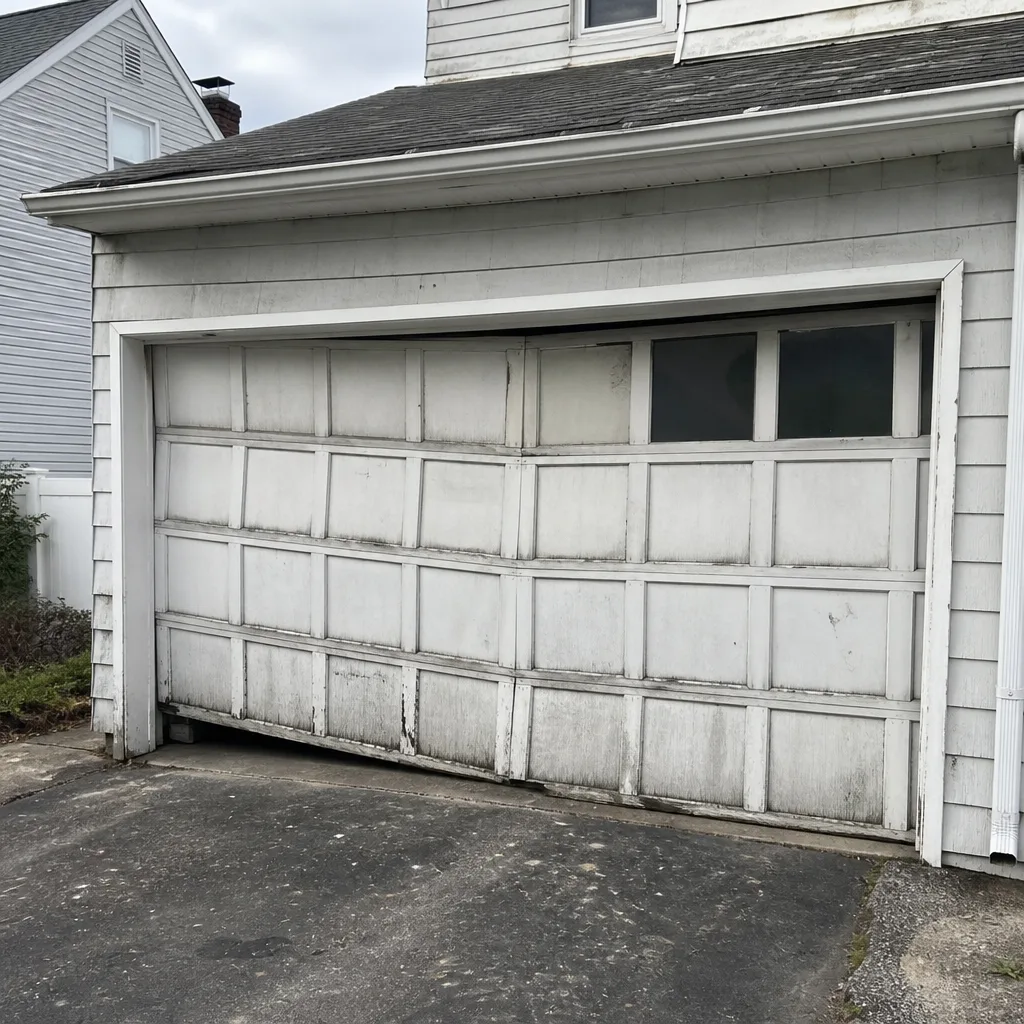 Before
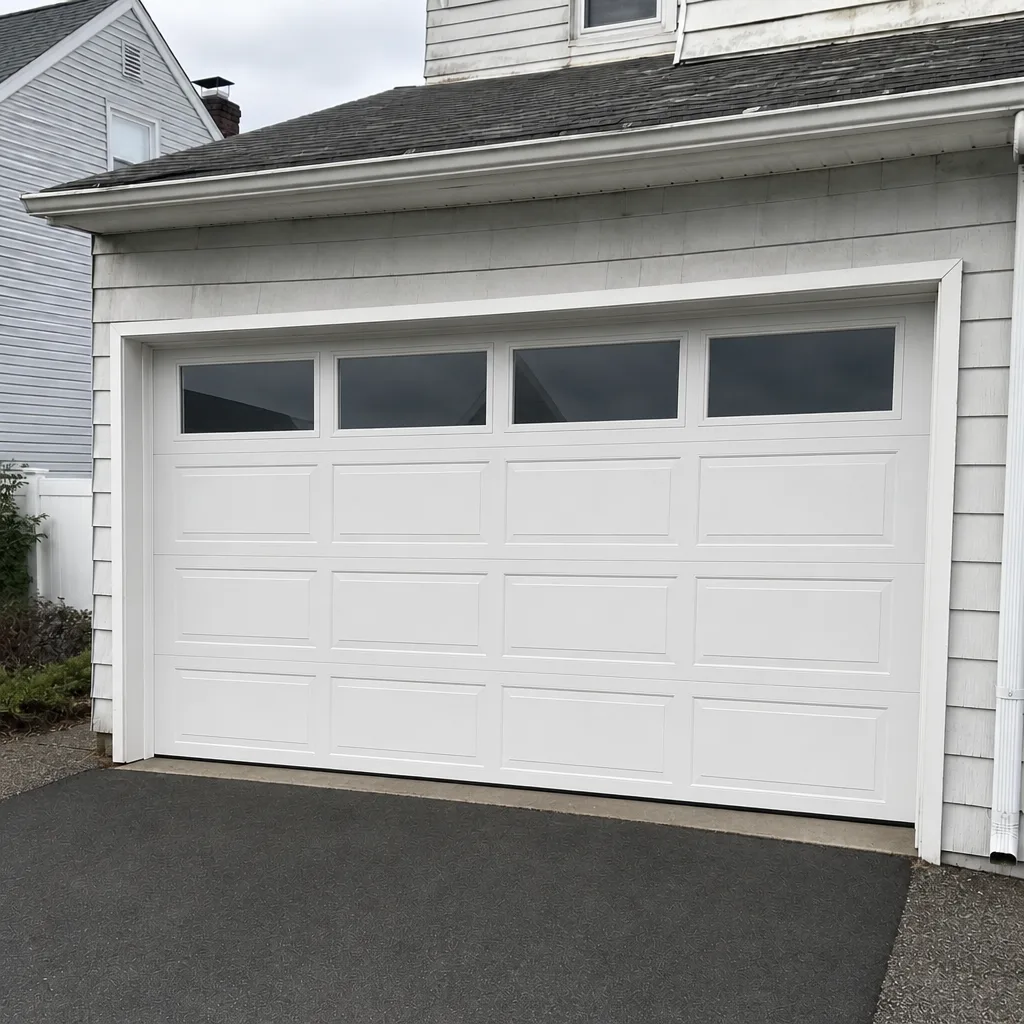 After
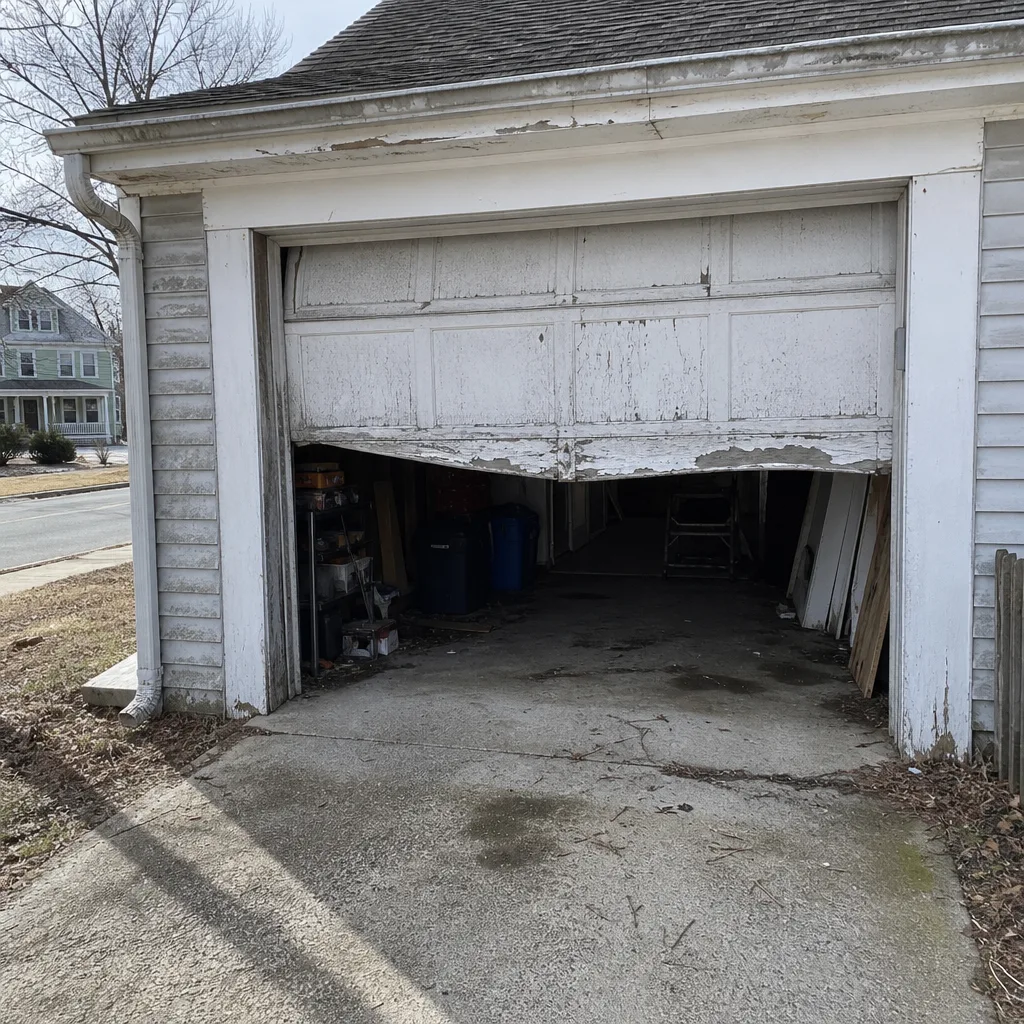 Before
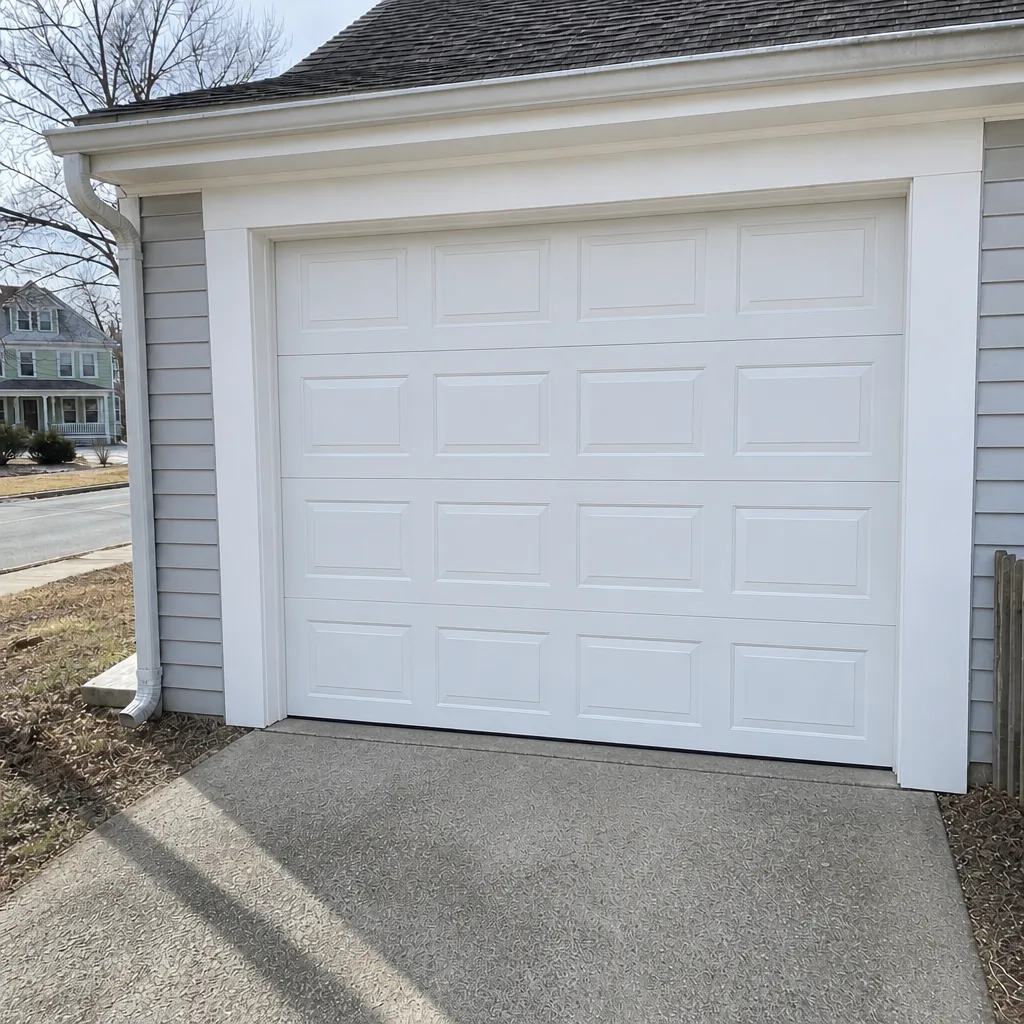 After
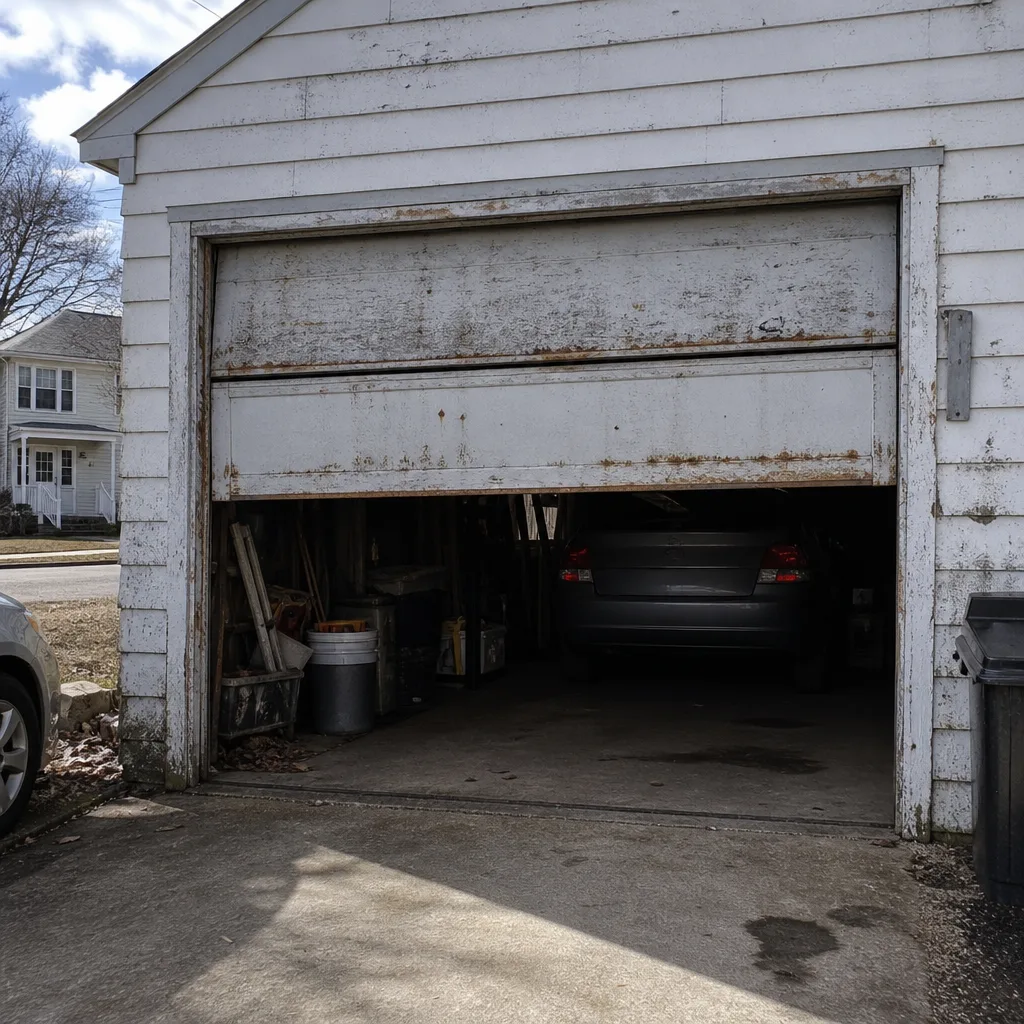 Before
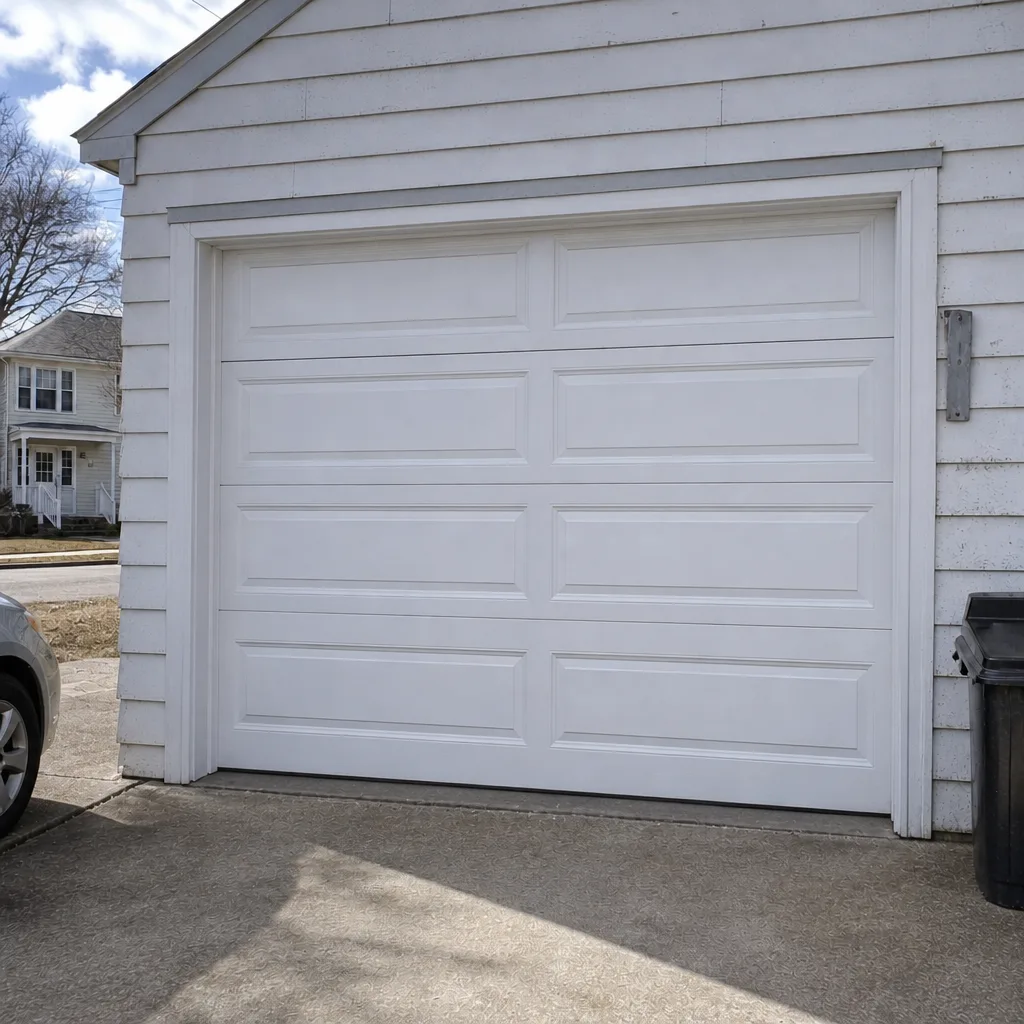 After
When to Call a Professional
Call a professional the moment a spring, cable, or bottom bracket is involved, or when the door won’t stay up when raised by hand. Call when a door is off its track, when the opener runs but the door doesn’t move, and when a door that normally closes won’t close at all: a gap to the outside is a security problem, and we treat it as an emergency. Call when you’re not sure which part failed, because a description over the phone is free and a wrong diagnosis at the hardware store isn’t. Fall River Garage Door Repair Co offers free estimates in Fall River. We work on the whole door, from the spring to the opener to the panel, and we tell you which repairs are safe to handle yourself and which aren’t. Call (866) 819-6714.
Frequently Asked Questions
No. A wound torsion spring stores hundreds of pounds of force and releases it in a fraction of a second, so “being careful” doesn’t apply, because the danger isn’t gradual. It’s a sudden release, not a slow failure. Spring replacement requires winding bars and the knowledge to lock the door off, and it belongs to a trained technician. Even experienced technicians handle springs with the door secured and the tension controlled, not by hand. Call (866) 819-6714 for a free estimate on spring replacement in Fall River; we’ll tell you whether it’s a single spring or a matched pair that needs replacing.
Weatherstripping, lubrication, photo-eye alignment, remote and keypad programming, cleaning, and visual inspection are all safe for a homeowner with basic tools. Roller and hinge replacement can be done by some homeowners on a door in working order, but only if the door is balanced and the right tools are on hand. Anything involving springs, cables, bottom brackets, or a door that’s stuck mid-travel is a professional job. Call (866) 819-6714 if you’re not sure which side of that line your repair falls on.
If the motor hums or runs but the door doesn’t move, a broken spring or a jump cable is the most likely cause, because the opener is turning but the door’s balance has failed. The opener isn’t strong enough to lift a door whose spring has let go, and it shouldn’t be asked to try. On a Genie or Craftsman opener, you may hear the motor run for a few seconds before it trips the safety limit. Call (866) 819-6714 and describe what you hear and whether the door moves; that tells us whether it’s a spring, a cable, or the opener itself.
No. If one spring of a pair has broken, the remaining spring is carrying the load and the door is out of balance. Running the opener on a door with a broken spring strains the opener and the one spring that’s left, and a door that won’t stay up can drop. Leave the door closed and call for spring service. Our technicians work on garage door spring repair and will tell you whether one spring or both need replacing, along with the estimate before the work starts.
The written estimate we give you is the price we do the work at. We quote the part and the labor, and we confirm what’s needed on your door before the work starts. If the technician finds something different from what the phone description suggested, you’ll hear about it before any work begins, not after. Call (866) 819-6714 for an estimate, and call (866) 819-6714 again if the door gets worse in the meantime.
The local professional we connect you with is licensed and insured as the state requires, and works on garage doors and openers from eight major brands. Our technicians have up to 11 years of experience, and they handle both the door hardware and the opener systems that work together on the same door. That matters in Fall River, where an older door and a newer opener are commonly mismatched, and where getting the diagnosis right the first time is the difference between one visit and three.
The Bottom Line
The garage door DIY question isn’t really about how handy you are. It’s about which parts you’re willing to work on while they’re storing energy, and the answer is simple: none of them. Weatherstripping, lubrication, sensors, and remotes are yours to handle, and doing them saves you a call-out. Springs, cables, bottom brackets, and track work under load belong to a technician with winding bars and the knowledge to use them. Everything else sits in between and depends on the door, the tools, and whether you know when to stop. Start with Fall River Garage Door Repair Co if you’re unsure, and skip the guesswork.
The cleanest way to decide is to describe the door out loud to yourself. If what you’re describing is a sound, a sag, or a door that won’t close, that’s a description a technician can work from. If what you’re describing is “I’ll just loosen this and see,” stop. Call (866) 819-6714 for a free estimate, tell us the brand and what the door is doing, and we’ll tell you what’s safe to do yourself and what we should handle. Whether you’re in the Highlands or anywhere else in Fall River, we’ll get the diagnosis right and quote the work before it starts. One call covers the whole door.
Written by the team at Fall River Garage Door Repair Co.