Last updated November 22, 2026
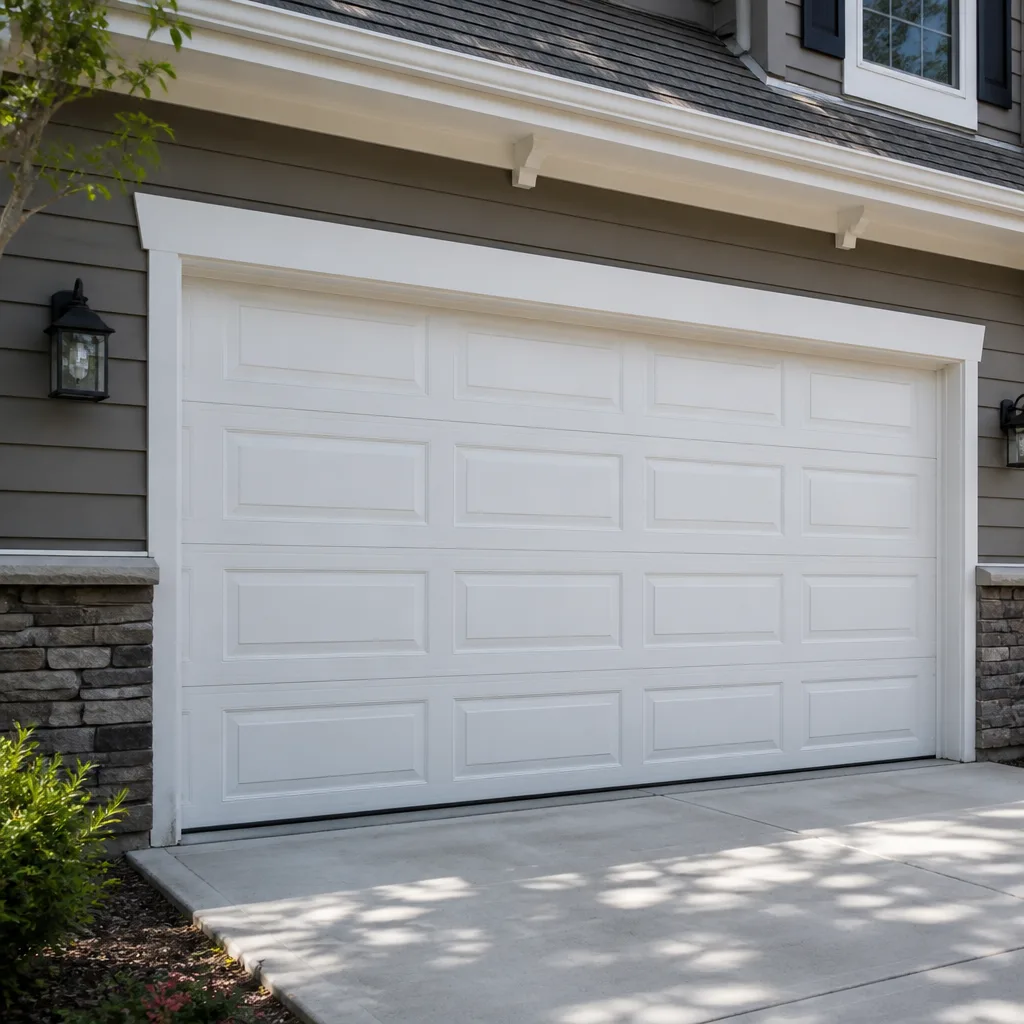 Raised-panel steel
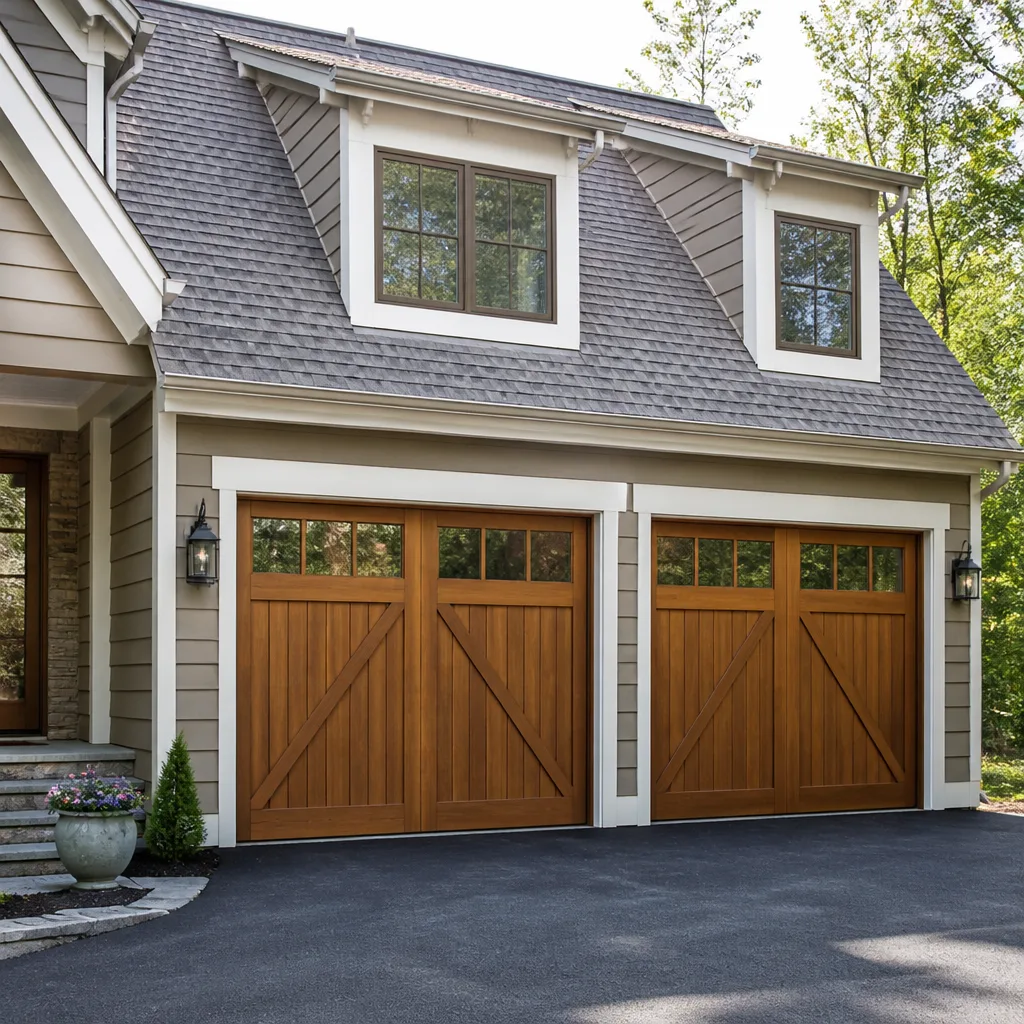 Carriage house
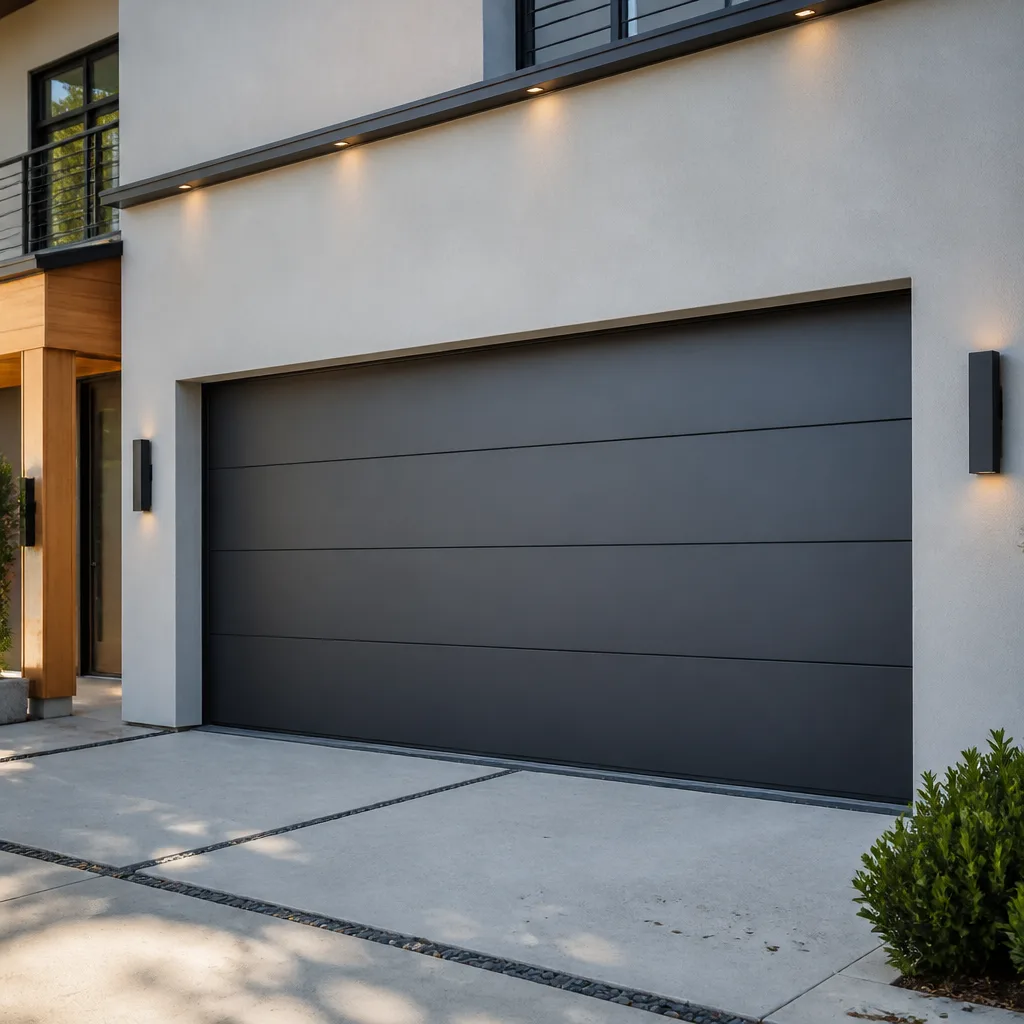 Modern flush
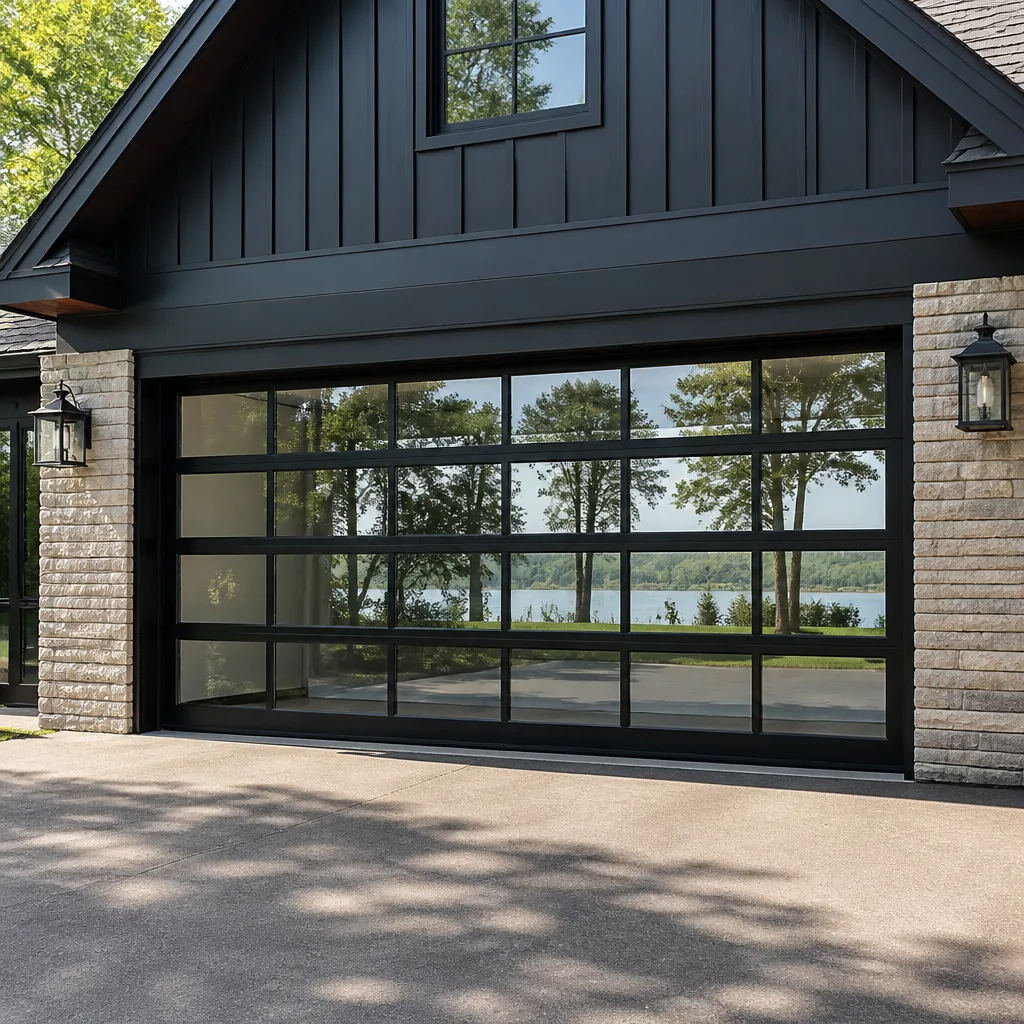 Full-view glass
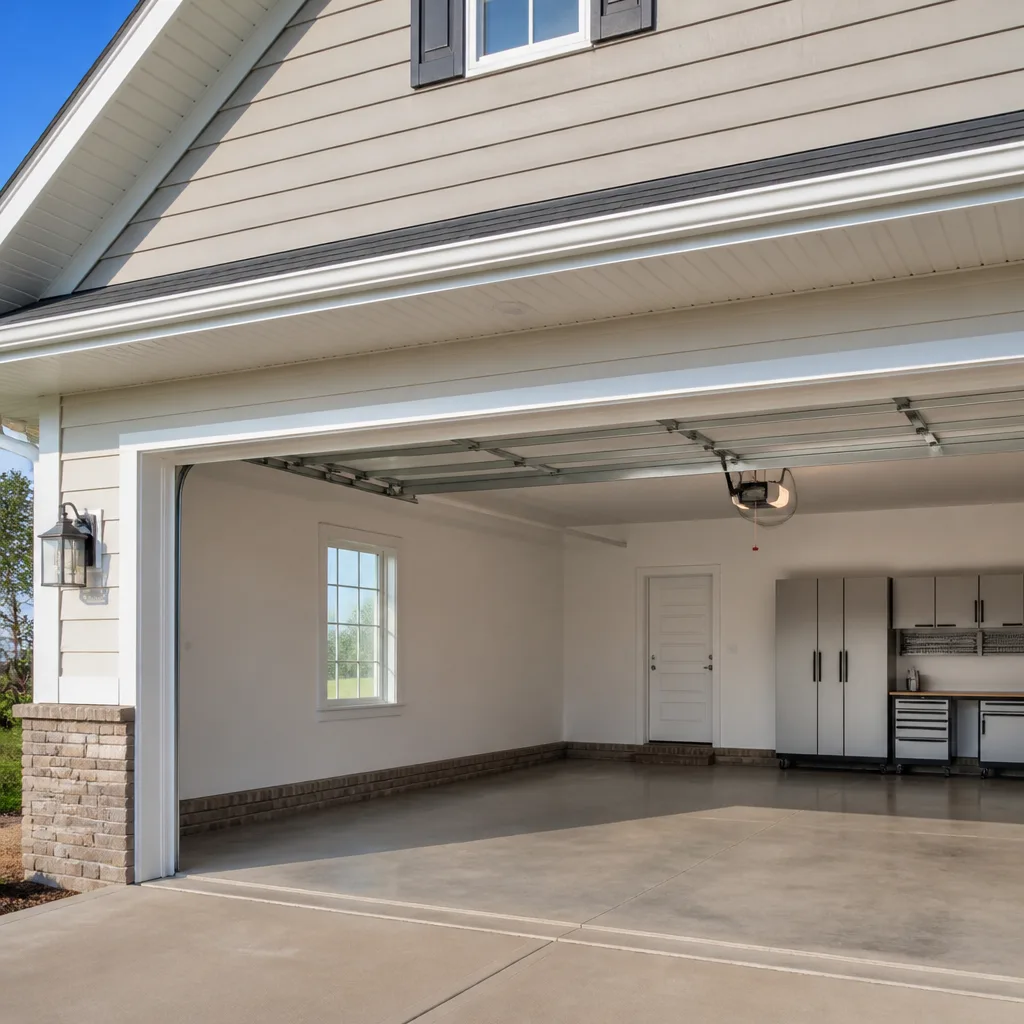 LiftMaster openers
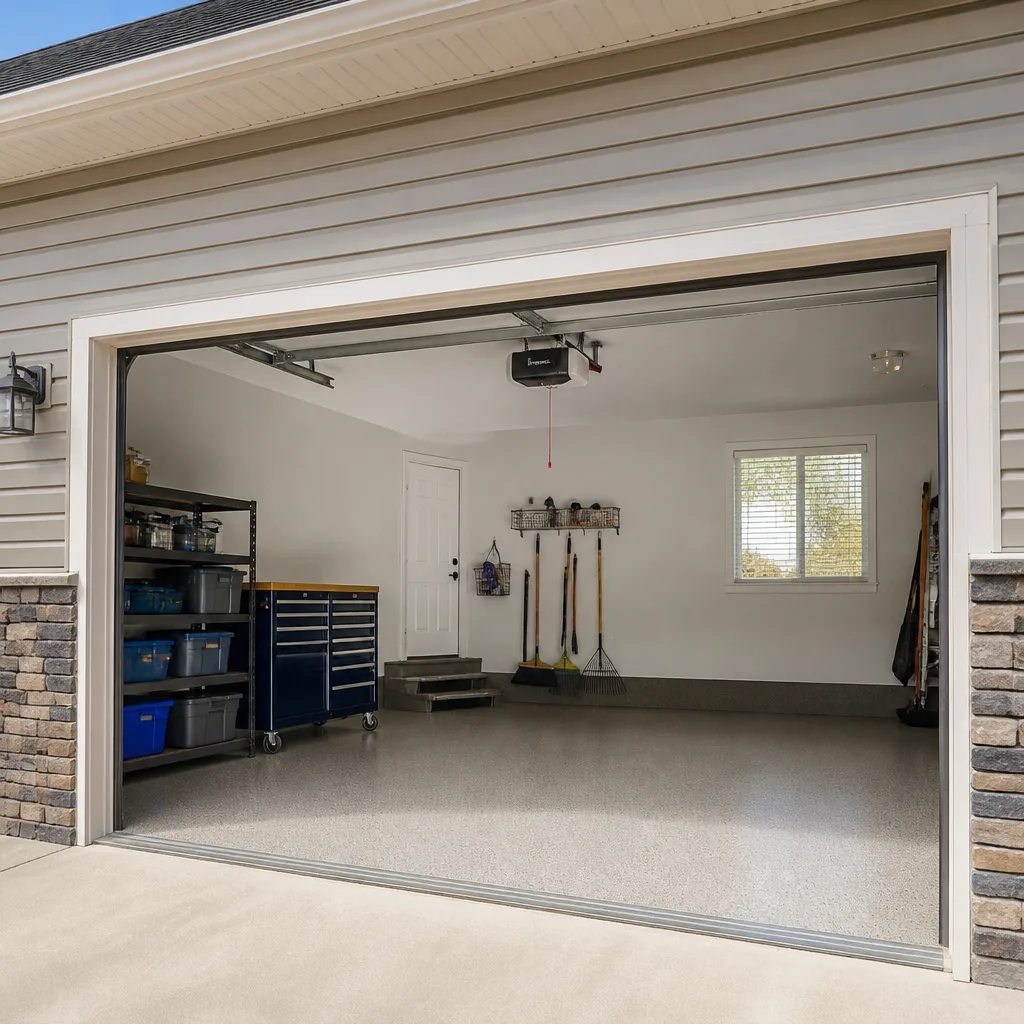 Chamberlain openers
Full 25-point door and opener safety check with every visit - springs, cables, rollers, tracks, and your LiftMaster or Chamberlain opener included
You get a price before we start. It does not change when the pro arrives.
Get your free estimateThe Complete Guide to Garage Doors in Fall River
Most Fall River homes were built before the garage door systems we install today even existed, which means the standard beginner’s guide floating around online was written for someone else’s house. A triple-decker near the Flint with a narrow carriage opening and a 1970s chain-drive opener has almost nothing in common with the new construction those guides describe. Wide temperature swings off Mount Hope Bay, older framing, uneven floors, and a mix of Victorian front doors and mid-century garage openings all change the answer to the simplest questions: which door to buy, when to repair and when to replace, and what materials will actually last here. This guide maps every decision to conditions specific to Fall River, so you can walk into a purchase or a repair knowing what matters.
Quick Answer
Choosing or repairing a garage door in Fall River comes down to three local conditions: older homes with non-standard openings that need measured, custom-sized doors; freeze-thaw winters and humid summers that punish cheap hardware; and coastal air off Mount Hope Bay that accelerates corrosion on springs, tracks, and steel panels. Match the material to our climate, confirm the opening is measured before you buy, and repair rather than replace whenever the panels and structure are sound.
Styles & brands we work with
- Raised-panel steel
- Carriage house
- Modern flush
- Full-view glass
- LiftMaster openers
- Chamberlain openers
Table of Contents
- How Fall River’s climate shapes garage door performance
- Why older Fall River homes need careful measuring before you buy
- Repair or replace: how to decide in a typical Fall River home
- Which door materials hold up to southeastern Massachusetts winters
- Matching a new door to South End and Highlands architecture
- Openers, springs, and the parts people forget
- A seasonal maintenance routine that works here
- What garage door work typically costs
How Fall River’s climate shapes garage door performance
Fall River sits where southeastern Massachusetts meets the water, and that position creates a specific set of stresses no inland guide accounts for. Humid summers swell wooden door sections until they bind in their tracks. Cold snaps make steel contract and pull on the hardware that holds it. Coastal humidity off Mount Hope Bay settles on exposed metal day after day, and that steady moisture is what turns a spring from bright steel into orange rust well before its time. Tracks and hinges feel it too. A door that’s balanced and quiet in April can groan and drag by February.
The freeze-thaw cycle is the other half of the story. Water gets into small gaps, freezes, expands, and works at the seams of panels and the steel around hinges. Over years, that cycle widens cracks and loosens fasteners. In this climate, the details that separate a door lasting fifteen years from one lasting five are rarely visible on a showroom floor:
- Galvanized or powder-coated steel resists humidity better than plain painted steel, which chips and rusts at the edges.
- Stainless or coated springs last noticeably longer where the air is damp than bare oil-tempered springs.
- Sealed or treated wood composites handle moisture swings better than raw wood, which swells and warps.
- Nylon rollers run quieter and resist rust better than steel rollers in humid conditions.
If you notice your door getting stiffer through the seasons or rust starting at the hinges, that’s usually the first sign the hardware is being worn down by the climate rather than by age alone. A technician who works in this region sees these patterns constantly and can tell you whether it’s surface rust to watch or a spring that needs replacing.
Why older Fall River homes need careful measuring before you buy
The single biggest mistake we hear about with older Fall River homes is ordering a standard-size door before anyone measures the opening. Plenty of houses across the Highlands, South End, and the triple-decker blocks near the waterfront were built long before garage doors used today’s standard sizes. Openings are often narrower, shorter, or slightly out of square. Floors slope. Headers sag a little with time. A door that’s a half inch off can be impossible to fit without rebuilding the opening.
Here’s how a proper measuring process goes before any door is ordered:
- Measure the opening in three places – top, middle, and bottom for width, and left, center, and right for height. The smallest measurement is the one that counts.
- Check the headroom above the opening to confirm what door and opener combination will fit, especially where a low ceiling limits travel.
- Measure side clearance on both sides for the track and torsion hardware.
- Look at the floor line – a slope means the bottom seal has to be custom-fit or the door will leave a gap.
- Confirm the wall above the opening is sound enough to carry the weight of the door and the torsion system.
This is why we tell people not to buy a door off a showroom floor without a measurement. A custom-sized door isn’t a premium upgrade in a city full of older homes; it’s often the only option. When the opening is a true standard size, which does happen on some mid-century houses, a stock door can work. But you won’t know until someone puts a tape on it.
If your current door is beyond repair, our garage door installation team can measure the opening, factor in the framing, and bring a door that fits the first time.
Repair or replace: how to decide in a typical Fall River home
The repair-or-replace question gets fuzzy because most guides lump every part together. In practice, the answer depends on which part failed and how far the damage has spread. A broken spring on an otherwise sound door is almost always a repair. A door with rot through the bottom panel or cracked sections usually can’t be saved. Here’s how the decision usually shakes out in a Fall River home:
- A snapped spring or frayed cable – repair. These are wear parts and replacing one spring or a matched pair is routine work for a trained technician.
- A failing opener motor or stripped gear – repair, or replace the opener alone if it’s an older model whose parts are hard to source.
- A dented or cracked panel – often repairable by replacing the section, provided the door’s manufacturer style is still available. If the door is discontinued, replacement becomes the practical answer.
- Rot through the bottom panel or jambs – this is where repair starts to lose. Wood rot spreads, and patching the visible damage rarely solves the water problem behind it.
- Sagging, bent tracks, or a door that’s out of balance – the repair depends on what’s bent. Tracks can be replaced; a twisted door frame usually can’t be fixed to a reliable standard.
- Repeated spring failures or a door that’s noisy after every repair – a sign the whole system is worn out together, and replacement may cost less over time.
In older Fall River homes, we’ve seen another wrinkle: doors installed decades ago with hardware the original manufacturer stopped making. In that case, a technician has to know how to work with the system that’s there, or tell you honestly when a matched replacement part doesn’t exist. Familiarity with mainstream hardware makes that conversation faster. Our garage door repair team handles repairs on both older and current systems.
Which door materials hold up to southeastern Massachusetts winters
The right material is the one that can survive a Fall River winter without swelling, warping, or rusting through. Each option carries a trade-off, so here’s how they compare in this climate.
Steel
Steel is the most common choice, and for good reason. It’s strong, affordable, and available in a wide range of styles. The catch is rust. In a humid climate, cheap steel with a thin coating will start to show rust at the bottom panel and hinges within a few years. Galvanized or powder-coated steel, especially with a bottom seal that keeps water off the panel, holds up much better. Steel doors are a good fit if you maintain them and keep the paint intact.
Wood composite
Composite doors that look like wood are a solid middle ground for homes with older architectural style. They handle the look of a historic Fall River facade without the swelling and warping of raw wood. Quality matters here. Cheaper composites can delaminate if water gets into the seams, so it’s worth checking the manufacturer’s finish and warranty details. A well-made composite is one of the better long-term picks for a humid climate.
Aluminum
Aluminum won’t rust, which makes it appealing in humid conditions. It’s also lightweight, so less stress on the opener and springs. The trade-off is dent resistance. Aluminum dents more easily than steel, so it’s less forgiving in an active driveway or where kids play. It’s a reasonable choice for oversized openings where weight matters more than impact resistance.
Solid wood
Solid wood remains the classic look, and in a neighborhood of century-old homes it fits the architecture better than anything else. But raw wood needs regular sealing and painting in this climate, and it swells in humid summers and cracks in dry cold. It’s a choice for someone willing to maintain it, not for a homeowner who wants zero upkeep.
Whatever material you pick, the hardware matters as much as the panel. Corrosion-resistant springs, sealed hinges, and nylon rollers make a real difference where humidity never really lets up. We handle installation and repair on doors from Clopay, Amarr, Wayne Dalton, and Raynor, so we’ve seen how each performs in real Fall River conditions.
Matching a new door to South End and Highlands architecture
A garage door takes up a big share of a house’s frontage, and in neighborhoods like the South End and the Highlands that means the wrong door stands out. Older Fall River homes tend to fall into a few architectural families, and each points toward a different door style.
- Victorian and Queen Anne homes – carriage-style doors with window rows and raised panels echo the trim and detailing these houses already carry. Wood composite works well if you want the look without the maintenance.
- Colonial and traditional homes – classic raised-panel steel doors in a muted color blend in rather than draw attention. A simple panel pattern reads as part of the facade.
- Mid-century and ranch-style homes – clean, low-relief lines and a few windows suit the simpler geometry of these houses.
- Triple-deckers and mixed-age blocks – a plain, well-finished door that matches the trim color is usually the safest bet. Fancy details on one unit can look out of place next to its neighbors.
Color matters more than people expect. Pick a shade that ties into the door, shutters, and trim rather than standing on its own. If a house is in a historic district, it’s worth a quick call to the city to check whether there are rules on exterior changes before you order. We can’t quote code rules, but we can tell you what homeowners typically find and how to work with it.
If you’re choosing a new style, our garage door installation guidance covers the fit details that matter for older homes.
Openers, springs, and the parts people forget
The door is only half the system. The opener and springs do the daily work, and they’re where most problems start. Fall River homes have a huge range of openers installed over the years, from older Craftsman chain drives to modern LiftMaster belt units, and each behaves a little differently. An opener that’s undersized for a heavy older door will strain and fail early. A door with the wrong springs will feel heavy and burn out the opener motor faster.
When a door won’t open, the diagnosis usually points to one of these parts:
- Springs – the counterweight that makes the door feel light. When one breaks, the door becomes very heavy and dangerous to operate. This is not a DIY job. High-tension springs and cables can cause serious injury when handled without the right tools and training.
- Cables – frayed or snapped cables mean the door is no longer supported evenly. Stop using the door and call a technician.
- Openers and remotes – a motor that won’t respond, a gear that strips, or a remote that stops connecting are common and usually fixable.
- Sensors and safety eyes – misaligned sensors stop a door from closing. Small dust or obstruction on the lens is often the whole issue.
- Rollers and hinges – worn rollers and dry hinges make the door loud and hard to move, and eventually damage the tracks.
Openers and doors are a matched system. A technician who knows both sides can tell you whether your door from Wayne Dalton, Raynor, or a similar maker will pair well with a specific opener. That’s why we’re certified on the major opener brands including LiftMaster, Chamberlain, Genie, and Craftsman. When an opener fails, we don’t just swap it; we check that the door is balanced and the springs are right.
For opener problems, our garage door opener repair team diagnoses the motor and the door together, so a new opener isn’t wasted on a door with a bad spring.
A seasonal maintenance routine that works here
Given the climate in Fall River, a small amount of maintenance each season goes a long way. You don’t need to do anything technical or dangerous. Here’s a simple routine anyone can follow.
- Look at the door from the outside and check for rust spots on the bottom panel and around hinges. Catch it early and a little touch-up paint prevents a bigger problem.
- Check the bottom seal for cracks or gaps. A failing seal lets water in, which is the start of rot in wood doors and rust in steel ones.
- Test the door’s balance by disconnecting the opener and lifting the door by hand halfway. A properly balanced door should stay put with light effort. If it drops or feels heavy, the springs are the likely issue.
- Listen for noise. Squealing or grinding points to dry hinges or worn rollers. Don’t climb on a ladder to adjust springs or cables yourself – that part belongs to a technician.
- Clear the tracks of leaves and grit, and check the sensors for dirt.
- Look at the weatherstripping on the sides and top and replace any that’s dried out.
What to leave alone: springs, cables, and anything under tension. Those parts store enormous energy, and a mistake can cause serious injury. If the door starts to sag, move unevenly, or make a new noise after a cold snap, call a trained technician. For spring problems, our garage door spring repair service is the safe way to handle a failure.
What garage door work typically costs
Costs vary with the door’s size, material, and age, but here are typical ranges. Prices are estimates for planning only; the written quote sets the final price.
- Spring replacement – usually priced per spring. A matched pair, which is how springs are normally replaced, costs roughly twice the single-spring figure.
- Cable replacement – comparable to spring work, sometimes more if the tracks or drums also need attention.
- Opener repair or replacement – a range depending on the motor and remote system.
- Panel replacement – depends on whether the panel style is still in production. Discontinued doors often can’t be matched.
- Full door installation – the widest range, depending on material, custom sizing, and whether the opening needs any repair.
The one thing worth knowing before you call anyone: ask for a written estimate that spells out parts and labor before work starts. If the price moves once the technician sees the job, that’s a reason to ask questions, not to accept a surprise. A good technician will explain what changed and why before turning a wrench.
Common Mistakes to Avoid
- Buying a standard-size door without measuring. In older Fall River homes, openings are often narrower or out of square. A tape on the actual opening comes before a showroom visit.
- Trying to replace a spring yourself. High-tension springs store dangerous energy, and a slip can cause serious injury. This is the one repair that always belongs to a trained technician with the right tools.
- Ignoring rust at the bottom of the door. In coastal humidity, rust spreads. A spot of touch-up paint is cheap; a replacement bottom panel isn’t.
- Replacing the opener when the door is the problem. A heavy door with failing springs burns out any opener. Fix the balance before spending on new hardware.
- Ignoring a broken door as a security issue. A door that won’t close leaves the garage and the house behind it open to weather and theft. It’s a safety call, not a convenience one.
- Skipping the permit question on big jobs. If you’re changing the opening or structure, check with the city’s building department first. It’s a quick call that prevents problems later.
- Choosing a door style that clashes with the neighborhood. In the South End and Highlands, the wrong style draws attention. Match the trim, color, and panel pattern to the house.
See the difference
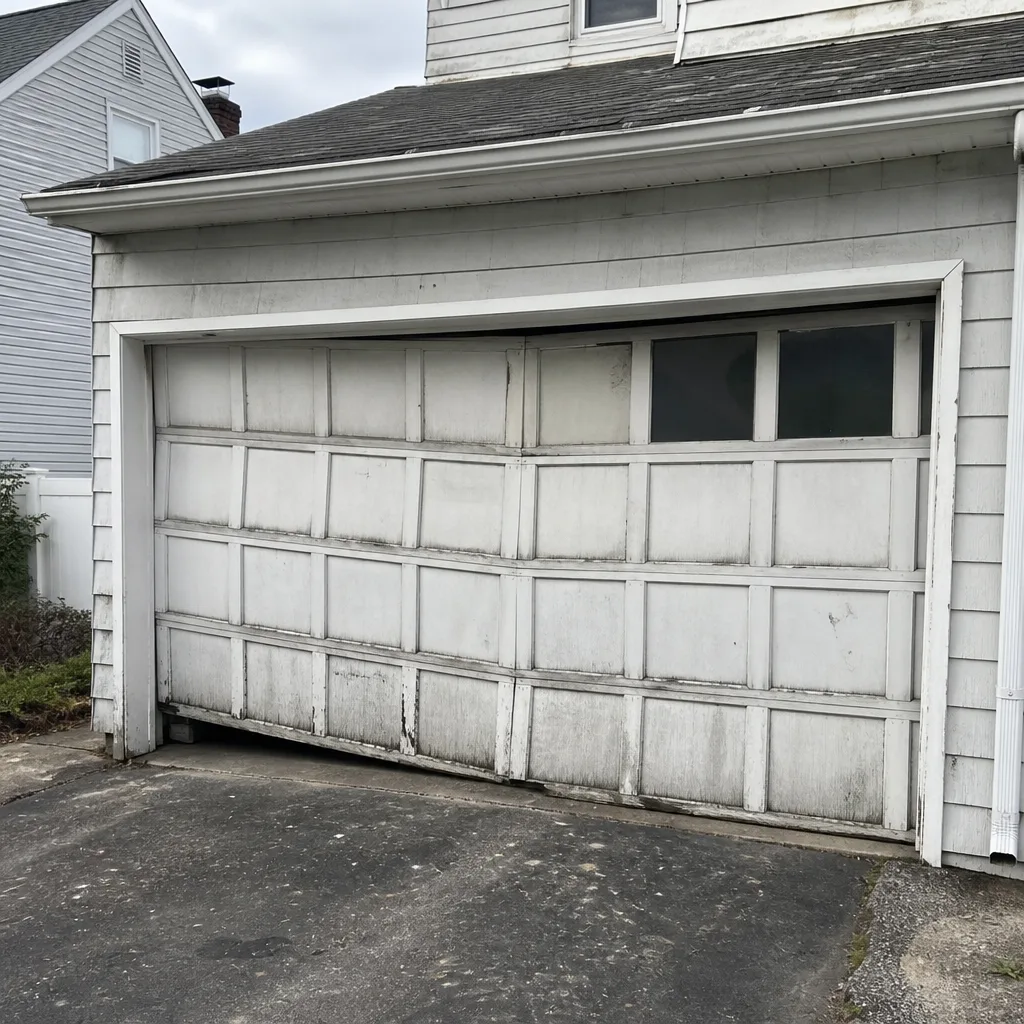 Before
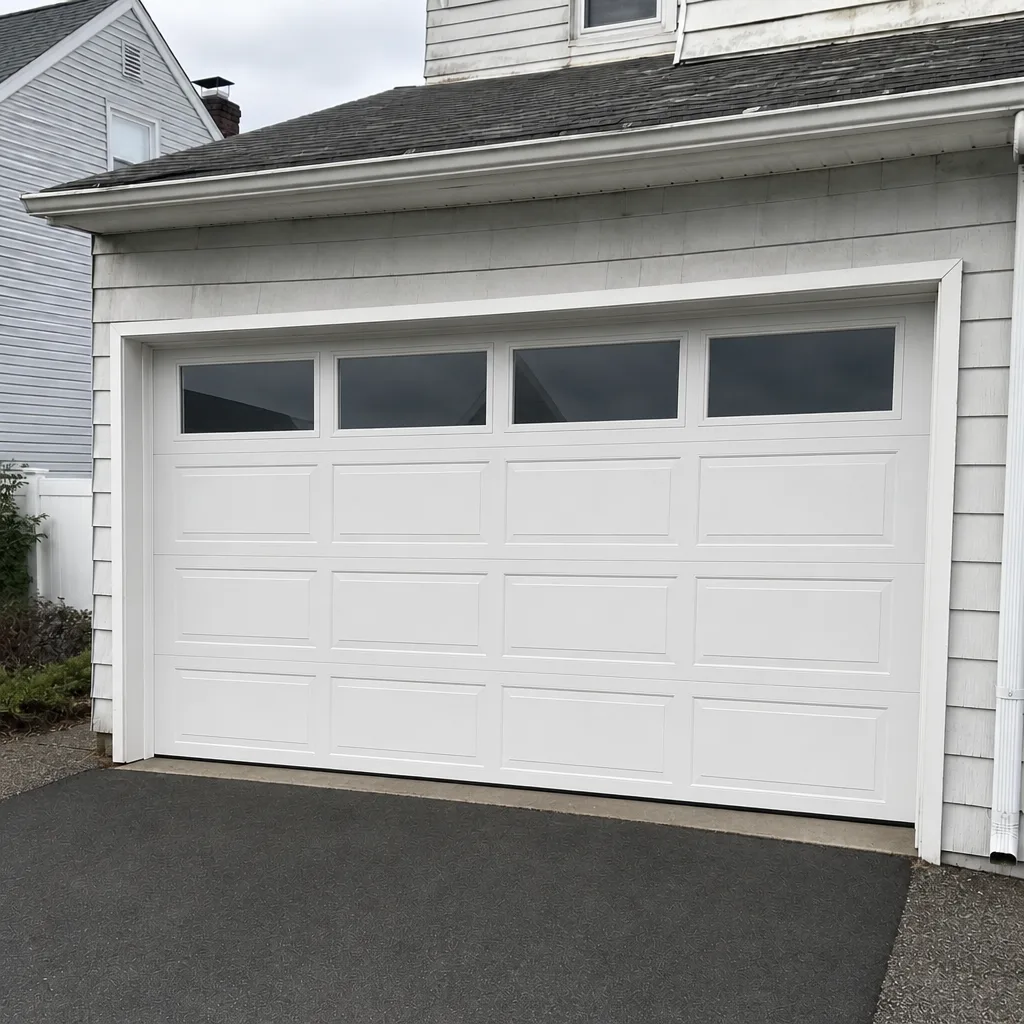 After
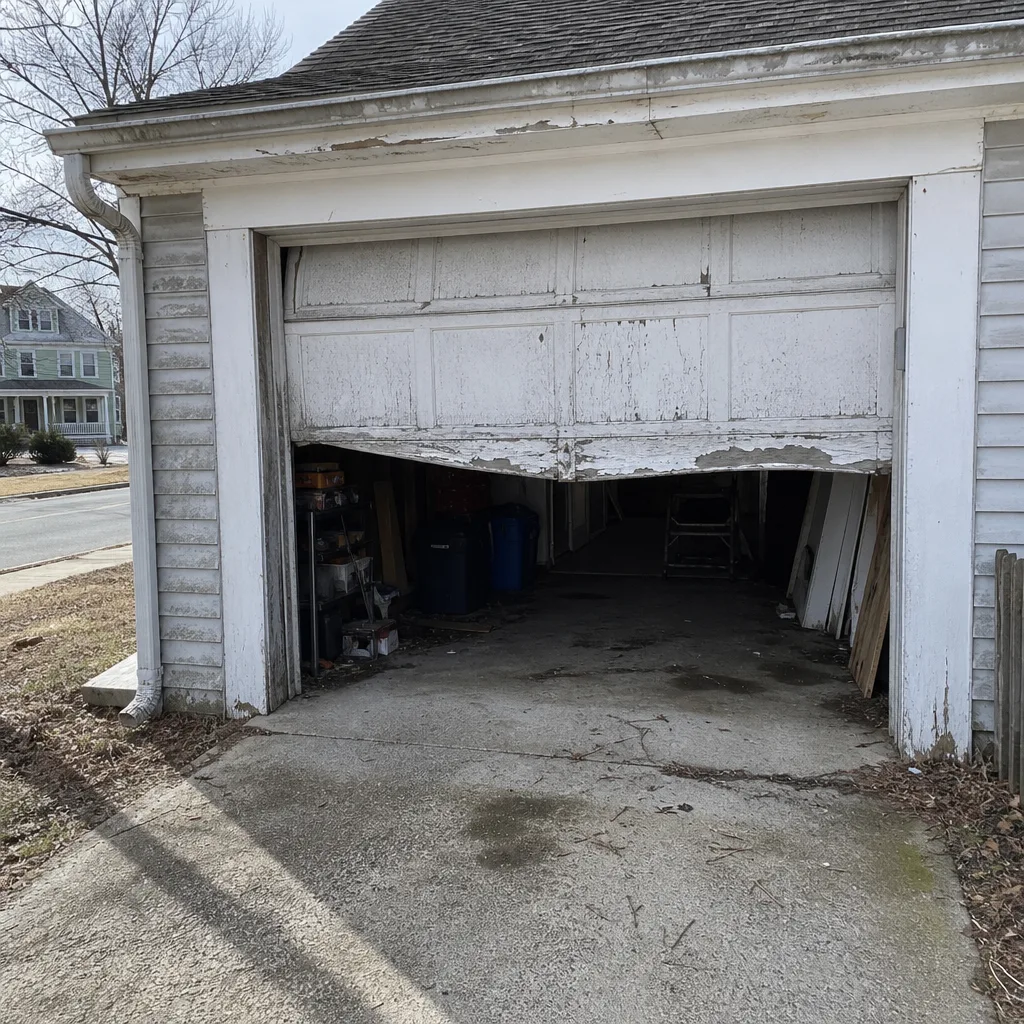 Before
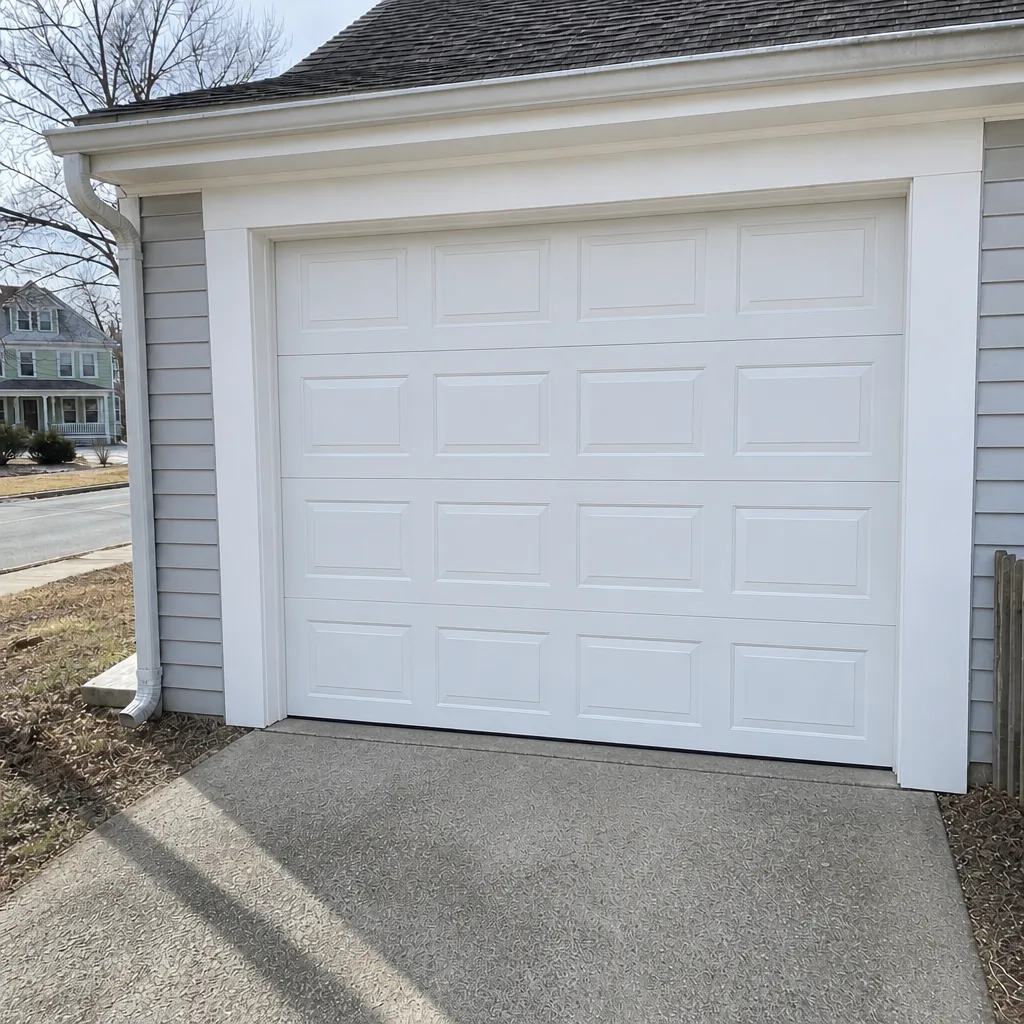 After
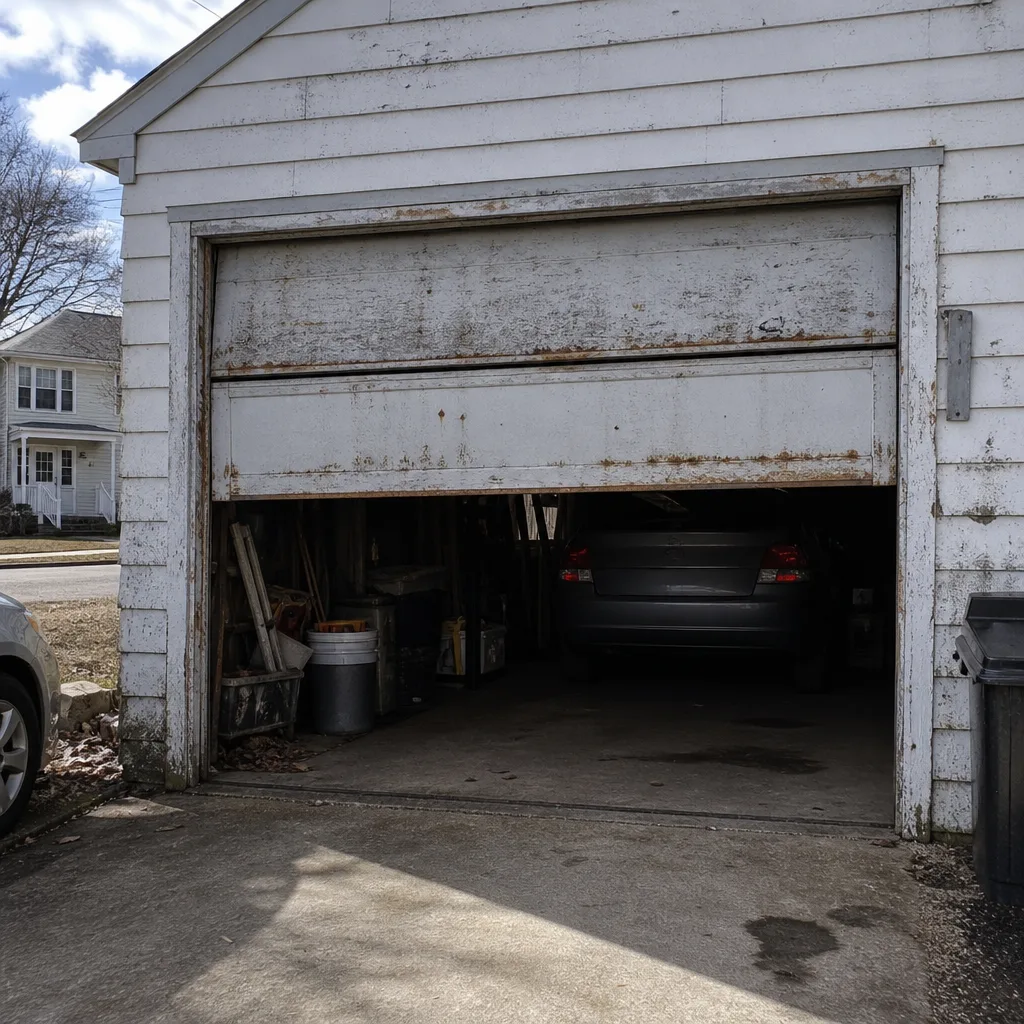 Before
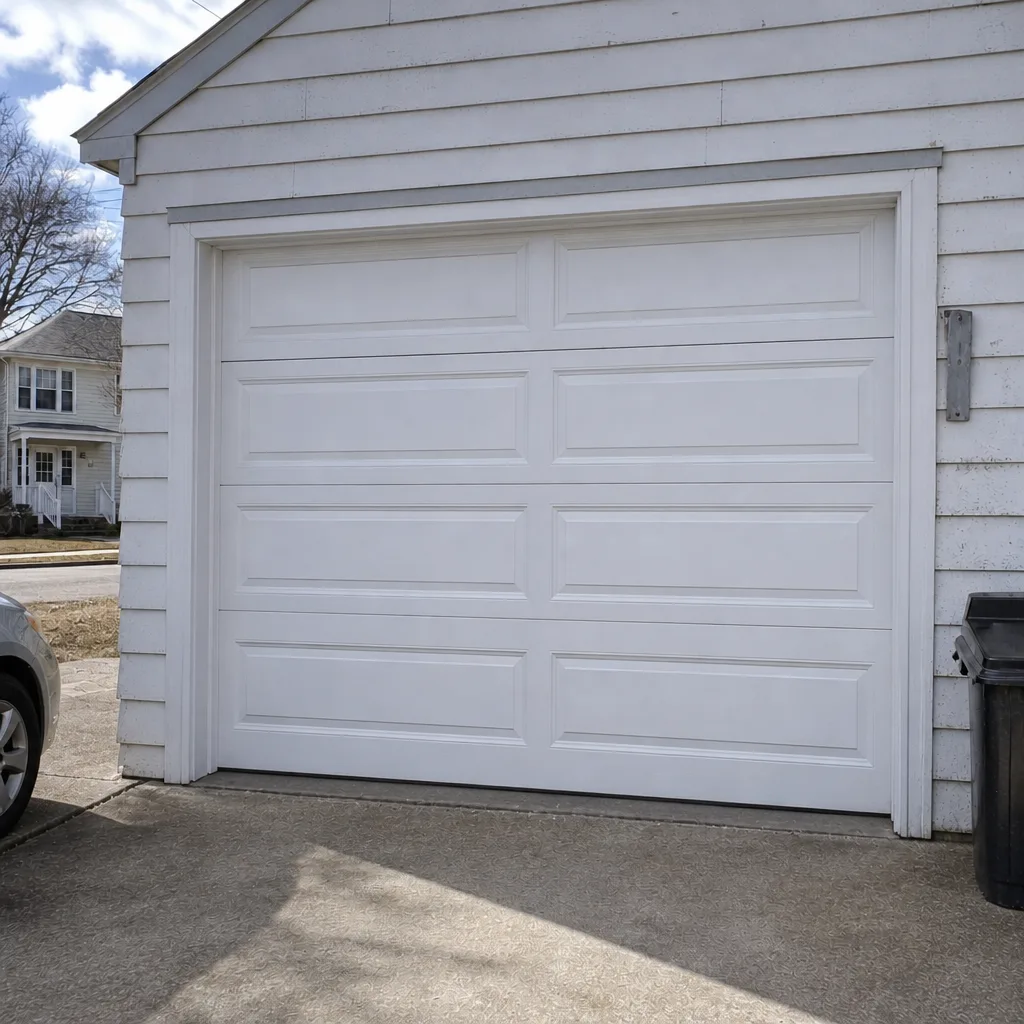 After
When to Call a Professional
Some problems are safe to handle yourself: cleaning tracks, replacing a remote battery, and replacing weatherstripping. Everything involving springs, cables, or the opener wiring under load belongs to a technician. Call when the door won’t open or close, when it’s unbalanced or sagging, when the opener runs but the door doesn’t move, when a spring snaps, when you hear grinding or scraping, or when the panel, tracks, or frame show real damage. If the door won’t close, treat it as a security and safety matter and call before it’s a bigger problem. Fall River Garage Door Repair Co offers free estimates in Fall River – call (866) 819-6714. We work on your brand, from LiftMaster and Chamberlain openers to Clopay, Amarr, Wayne Dalton, and Raynor doors, so you don’t have to make a second call when something doesn’t match.
Frequently Asked Questions
Spring repair costs depend on whether one spring or a matched pair fails, and in most cases both are replaced together. Expect a typical range, with the written quote setting the final price. Springs wear faster in humid coastal air, so a technician will check the condition of both. Call (866) 819-6714 for an exact quote – estimates are free.
Yes. We’re certified to work on eight major brands, including LiftMaster, Chamberlain, Genie, Craftsman, Clopay, Amarr, Wayne Dalton, and Raynor. Knowing the exact system means a faster diagnosis and the right parts the first time, so a repair doesn’t void a manufacturer warranty.
Often, yes. Many houses here were built before standard door sizes existed, so openings run narrower or slightly out of square. A measurement of the actual opening settles it. If the opening is a true standard size, a stock door can work.
It shouldn’t. Good practice is a written estimate before work starts, and any change explained before anyone touches the door. A tacked-on surprise after the fact is a reason to ask questions, not to accept it. Call (866) 819-6714 for a free estimate.
We connect you with vetted local professionals who are licensed and insured as their state requires. Our technicians have up to 11 years of experience, so the person on the job knows the hardware and the safety requirements for the work.
Emergency garage door service is a core part of what we offer, because a door that won’t close leaves the house open to weather and theft. Call (866) 819-6714 to book, and we’ll get a trained technician out as quickly as possible.
The Bottom Line
A garage door in Fall River has to handle more than a standard guide expects: older openings that need careful measuring, coastal humidity that eats at hardware, and freeze-thaw winters that work on every seam. Match the material to the climate, measure before you buy, and don’t confuse a worn door with a worn opener. Springs and anything under tension always belong to a trained technician. For everything else, the choice is simple: a well-matched door, maintained each season, will outlast a cheaper one installed without measuring. That’s the whole guide in one line.
When something goes wrong, or when you’re ready to plan a new door, we’re here to help. Call Fall River Garage Door Repair Co at (866) 819-6714 for a free estimate. One call covers the whole door, from opener to spring to the door itself. Our technicians have up to 11 years of experience, and we work on your brand. Learn more on our Fall River Garage Door Repair Co page or call today.
Written by the team at Fall River Garage Door Repair Co.