Last updated November 22, 2026
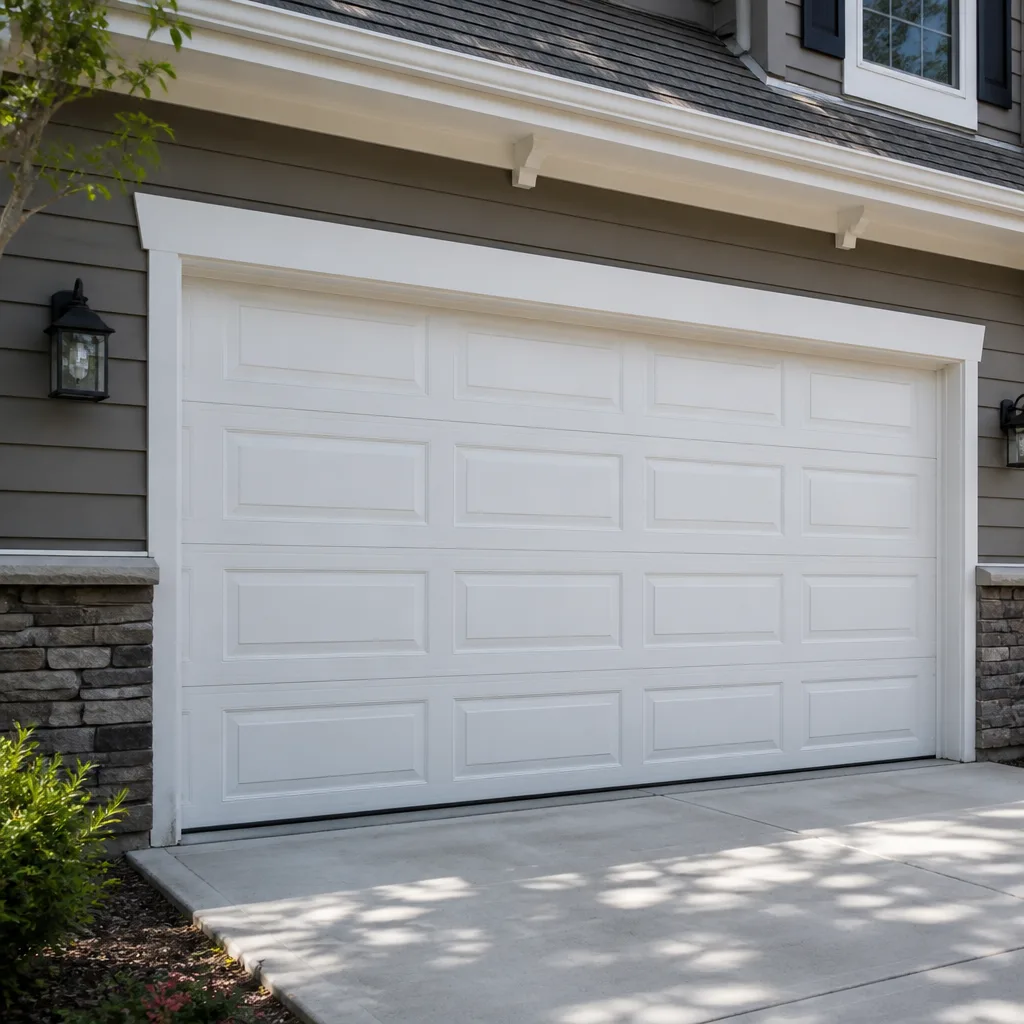 Raised-panel steel
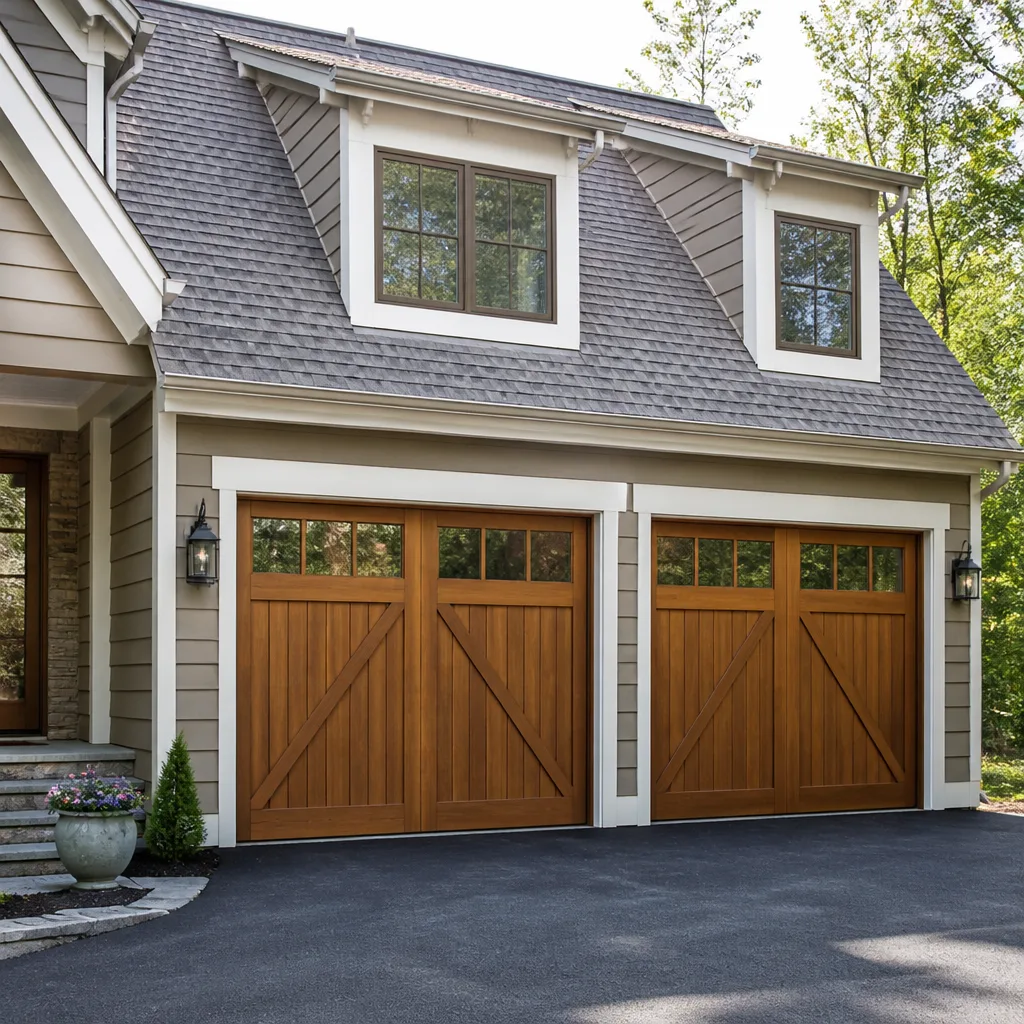 Carriage house
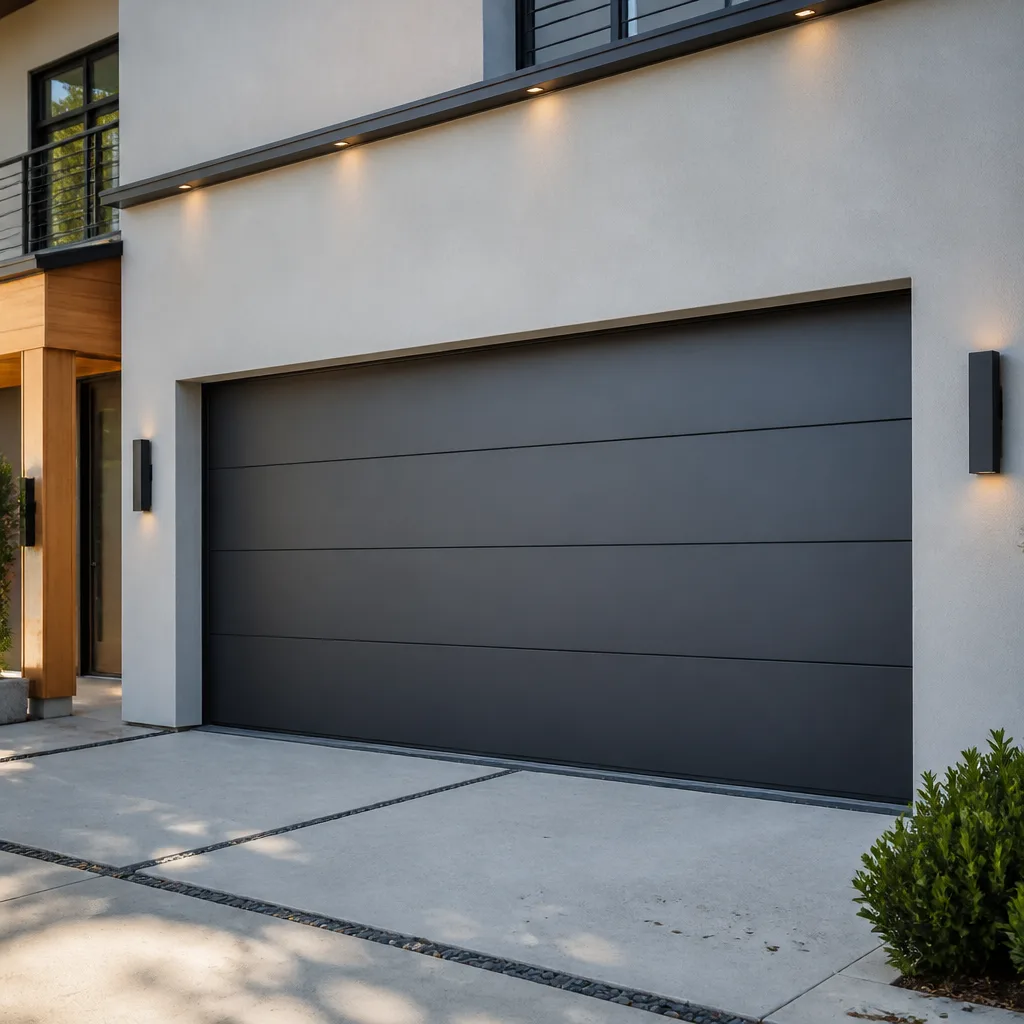 Modern flush
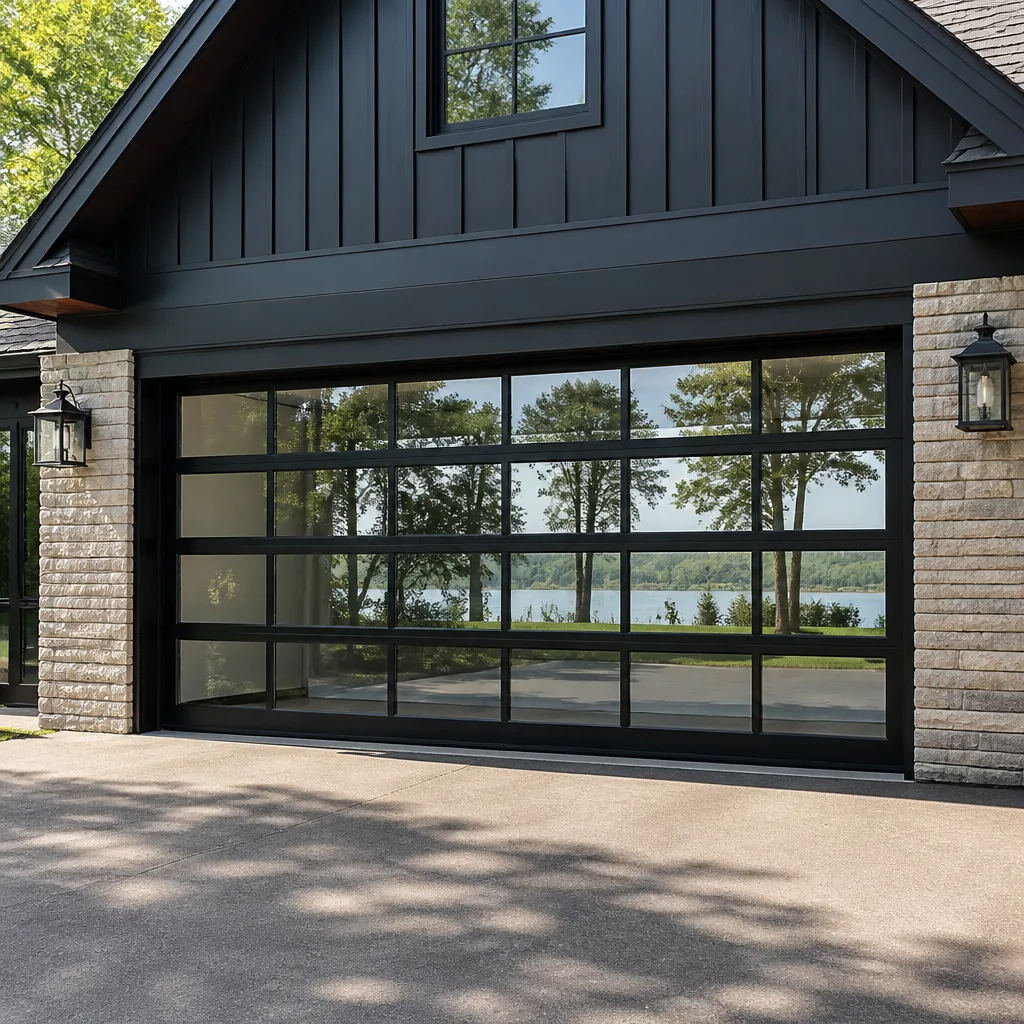 Full-view glass
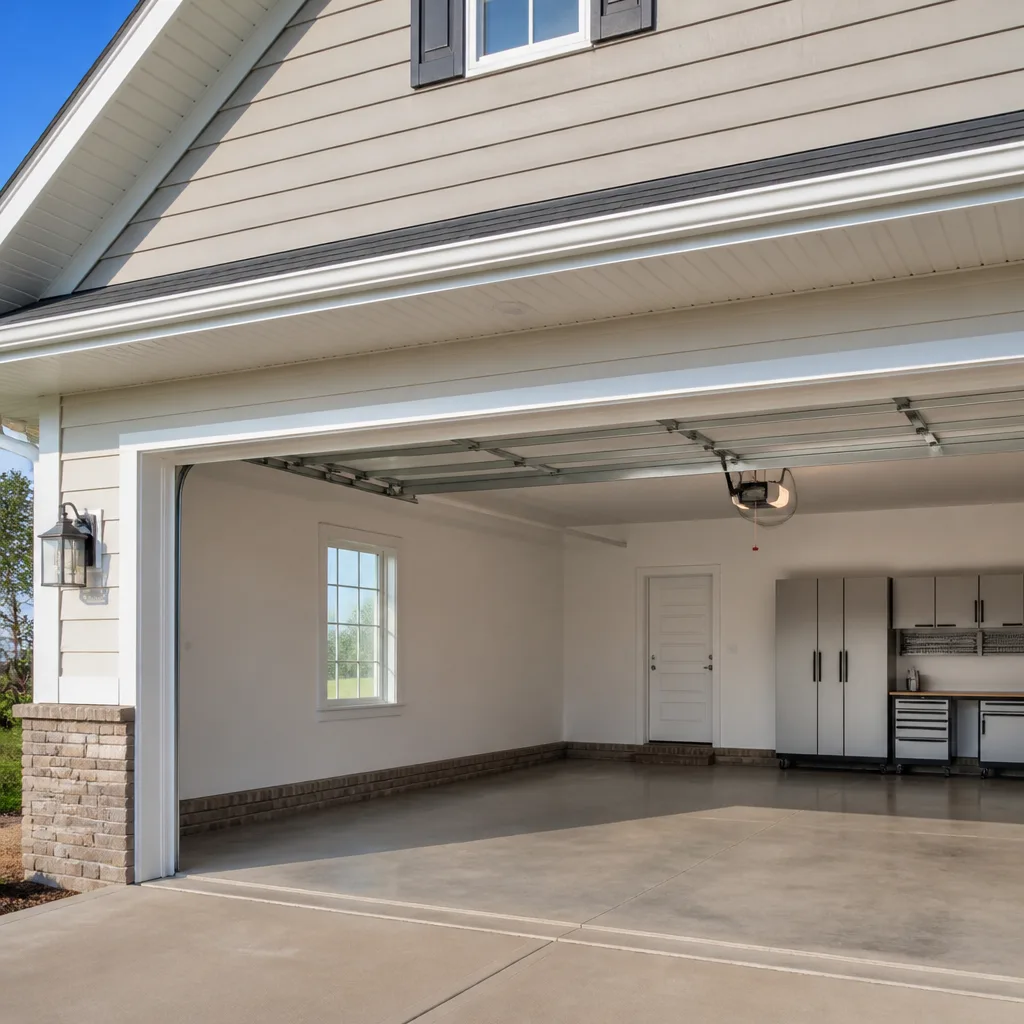 LiftMaster openers
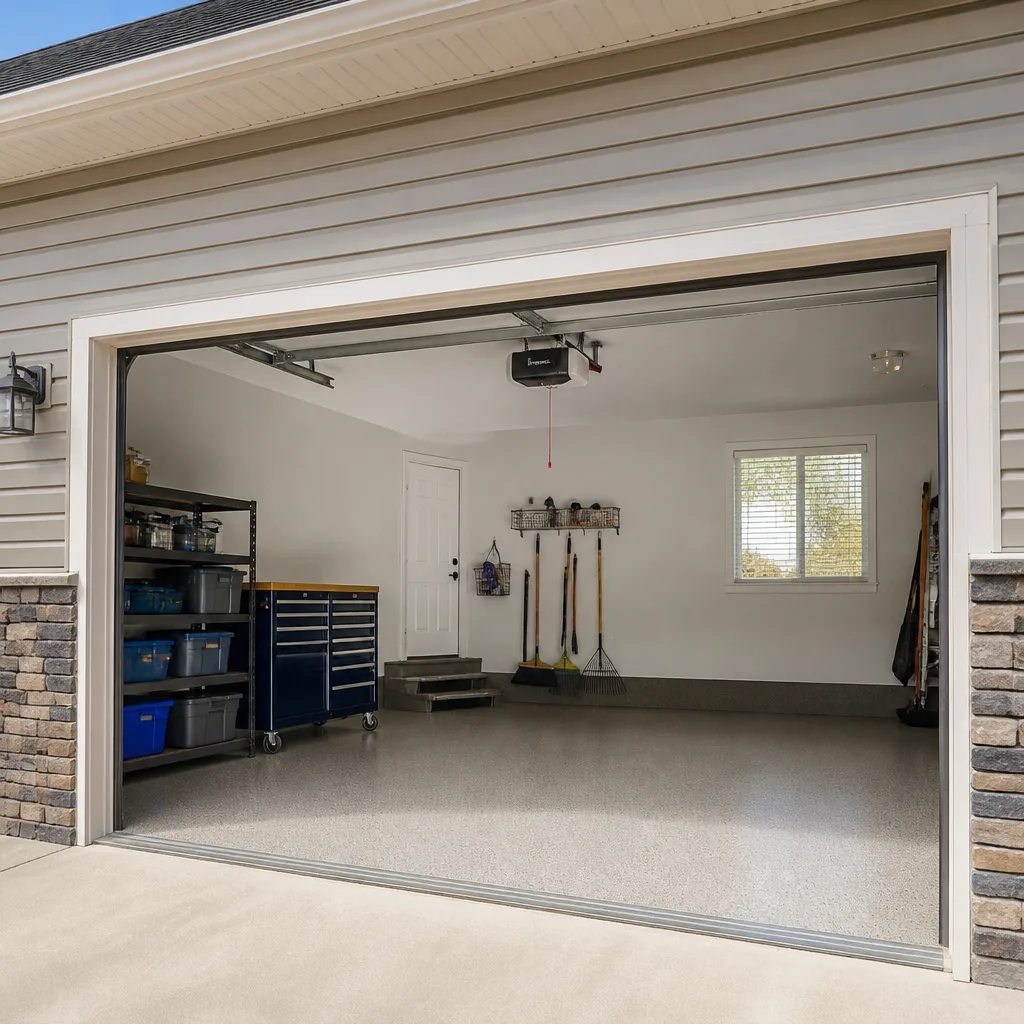 Chamberlain openers
Full 25-point door and opener safety check with every visit - springs, cables, rollers, tracks, and your LiftMaster or Chamberlain opener included
You get a price before we start. It does not change when the pro arrives.
Get your free estimateGarage Door Emergency Preparedness Guide for Fall River Homes
Most garage door emergencies aren’t really about the door. They’re about the sixty seconds right after something breaks, when you’re standing in the dark deciding whether to force it, call someone, or just leave the car trapped and hope for the best. The wrong choice in that minute is what turns a spring repair into a spring plus cable plus track job. Fall River winters make it worse: cold mornings put real stress on springs, and a door that won’t close leaves your garage and everything in it exposed to whatever the weather is doing. This guide walks through what to actually do, in order, before you touch anything. Read it once now, while nothing is broken, and you’ll handle the real thing calmly.
Quick Answer
When a garage door fails in Fall River, stop pulling on it and don’t force anything. If the door is stuck open and won’t close, secure the space manually and call for Fall River Garage Door Repair Co emergency service. If a spring has snapped, the door is under tension you can’t safely manage, so leave it and call (866) 819-6714. The worst outcomes come from homeowners trying to muscle a broken door into place.
Styles & brands we work with
- Raised-panel steel
- Carriage house
- Modern flush
- Full-view glass
- LiftMaster openers
- Chamberlain openers
Table of Contents
- What to do when a spring breaks with the door closed
- How to disengage your opener and lift the door by hand
- The door won’t close: securing your garage overnight
- Storm and impact damage: cosmetic or structural?
- What to have ready when you call for emergency service
- Why Fall River cold snaps cause so many failures
- Building a garage door emergency kit for Fall River homes
- Monthly checks that head off most emergencies
What to do when a spring breaks with the door in the closed position
A broken spring with the door down is the most common emergency call we get in Fall River, and the answer is simple: leave the door alone. The torsion spring above the door or the extension springs along the sides hold the door’s full weight. When one breaks, the door is no longer balanced. It’s heavy, and it’s unstable. The sound is unmistakable, a loud crack or bang from the garage, followed by the door settling or sagging. Your car is inside, you’re already late, and your instinct is to heave it open. That instinct is the problem.
Here’s what’s actually happening mechanically. A garage door in the closed position with a broken spring can weigh several hundred pounds with zero counterbalance. Lifting it isn’t like opening a normal door; you’re deadlifting the whole panel stack unevenly. The cables on either side slacken and can jump their drums. One person pulling hard on one side twists the door, and a twisted door bends panels and pulls the track out of alignment. That’s how a single-spring call turns into a cable, track, and panel repair. It also carries a real injury risk, because a door that comes down unevenly doesn’t stop for your hand.
What to do instead, in order:
- Step back and stay clear of the door and the springs.
- Make sure no one, especially kids, tries to lift it “to help.”
- Note which spring broke if you can see it safely: the torsion bar spring at the top, or one of the extension springs along the side tracks.
- Call for spring service and describe exactly what you heard and see. Our garage door spring repair technicians handle this daily and bring the correct spring size the first time.
Springs are one of the few parts of a home we tell people never to touch. They’re stored energy. Trained technicians use the right winding bars and control the tension; homeowners don’t have either. That’s not a sales line, it’s the reason the injury statistics on spring work look the way they do.
How to disengage your opener and lift the door by hand
If the problem is the opener and not a broken spring, the door itself is probably still balanced, and you can often open it manually. First, confirm the spring is intact. A balanced door lifts with one hand. A door with a broken spring feels like it’s been welded to the floor, so don’t force it. If the spring is fine, the manual release is your friend.
Nearly every opener from LiftMaster, Chamberlain, Genie, and Craftsman has a manual release cord, usually hanging from the carriage that rides the rail. It’s often red. Pulling it downward disconnects the car from the belt or chain so the door can move by hand.
- Pull the release cord firmly straight down. You’ll feel the carriage unlatch.
- With the door still closed, lift slowly from the bottom center, using both hands.
- Raise it to about waist height, then let go briefly to check balance. A healthy door stays put. If it wants to drop or fly up, stop and call a technician.
- Once open, prop it open with a sturdy clamp or a C-clamp on the track above a roller to keep it from sliding closed.
- Don’t re-engage the opener until the problem is fixed. The carriage should not be forced back into the drive.
One thing not to do: don’t yank the release if the door is partially open, because the door can slam down. And don’t re-engage it by pulling the cord while the opener is running. That’s how you strip the drive gear. In Fall River, we get a lot of calls where a homeowner disengaged the door, got the car out, and then couldn’t get the opener to reconnect. That’s usually a quick visit, but it’s a second trip you don’t need. Get it right the first time with garage door opener repair.
The door won’t close: securing your garage overnight
A door that won’t close is more urgent than many homeowners treat it. Your garage holds tools, bikes, a second fridge, and often the door into the house. An open garage at night is an invitation. So while you wait for service, think like you’re securing the space, not just parking the car somewhere else.
First, figure out why it won’t close, because a surprising number of “broken” doors are just safety sensors. The two small eyes at the bottom of the tracks need to see each other. A cobweb, a leaf blown in by a Nor’easter, or a bumped bracket will trip them, and the door reverses immediately. Check that they’re clean and facing each other. If the door goes down partway and reverses, it’s almost always the sensors or a misaligned track.
If the door genuinely won’t close, secure it manually:
- Disengage the opener and lower the door by hand, guiding both sides evenly.
- Lock the door down. Many doors have a manual slide lock; use it. This is your best protection, because keeping the door closed is easier than trying to protect an open garage.
- No manual lock? Drop a heavy C-clamp on the track above a roller on each side, tight against the roller so the door can’t slide up.
- If the door won’t come down at all, block the opening with a vehicle if you can’t move it inside, and secure the service door. Don’t stack cheap padlocks on a door that’s already off its track; the door itself needs fixing first.
- Turn on a light. A visible, lit garage reads as less of a target than a dark open one.
Don’t try to “temporarily” hold a door shut with rope through the handle or a chair braced against it. Those fail exactly when you need them not to.
Storm and impact damage: cosmetic or structural?
Fall River gets its share of wind and winter storms, and a falling branch or flying debris against a garage door leaves a bent panel. The question is whether it’s a cosmetic dent or something that’s compromising how the door operates. Hail isn’t really a concern here, so most impact damage we see comes from wind-driven objects, tree limbs, and the occasional car bumper.
Here’s how to tell the difference without a technician:
- Run the door. If it moves smoothly, stays level, and the gaps along the sides and bottom stay even as it travels, the damage is likely cosmetic. Watch for a panel that catches or rubs at any point.
- Check the tracks. A bent section of track, even a slight curve, causes the roller to bind. That’s not cosmetic; it loads the opener and the door unevenly.
- Look for a visible kink in a panel. A sharp crease weakens that section. A shallow dent usually doesn’t.
- Listen. New squeaks, pops, or a grinding sound when the door moves mean something’s out of alignment, and pushing it further risks more damage.
If a panel is kinked, misaligned, or the door came off its track, stop operating it. Running a structurally compromised door can pull it out of the tracks and bring panels down. That’s a safety issue, not a convenience one. Our garage door repair team can assess whether the damage needs a panel replacement or a larger fix. If you’re unsure, call before you cycle the door again. A five-minute conversation is cheaper than a door that folds.
What to have ready when you call for emergency service
The difference between a fast fix and a “we’ll have to come back with the part” visit is often the information you give on the phone. When you call (866) 819-6714, here’s what helps the technician arrive with the right parts and tools the first time:
- Your door brand and material. Steel, aluminum, or wood, plus the manufacturer if you know it. Clopay, Amarr, Wayne Dalton, and Raynor panels differ, and so do the parts.
- Your opener brand and model. LiftMaster, Chamberlain, Genie, and Craftsman all have their own logic boards and drive systems. A model number on the back of the unit tells us a lot.
- What happened, in plain words. “Snapped spring, door down, car inside” is enough. Mention any loud noise, the door stopping suddenly, or something falling against it.
- Door position now. Closed, open, halfway, off the track.
- Spring type if you can see it. One long spring across the top (torsion) or springs along the sides (extension).
- Your address and access details. Steep driveway, tight clearance, or a car blocking the door all matter.
Having this ready lets us connect you with the right local pro faster. It’s why we service eight of the most widely installed door and opener brands: we’re not learning your system on your driveway. A Craftsman opener doesn’t diagnose like a LiftMaster, and a Raynor door doesn’t carry like a Clopay. That familiarity shortens the repair and protects your manufacturer warranty.
Why Fall River cold snaps cause so many failures
Most garage door springs don’t break in July. They break on the first genuinely cold morning, and Fall River’s position at the mouth of the Taunton River, with its damp winters, makes that pattern predictable. Steel gets more brittle as it cools, and the cycles of freezing and thawing we get through a Fall River winter work a spring harder than warm weather does. Add the salt and grit that get tracked into the garage off the streets in winter, and you’ve got a mechanism under more stress than the same door in a mild climate faces. A spring that was near the end of its cycle in October is often the one that lets go in January. That’s why the best time to have your door looked at is before the cold settles in, not after. If a spring does snap during a cold stretch, don’t cycle the opener trying to “coax” the door. The motor isn’t the problem, and running it against a broken spring strains the opener for no gain. Treat the cold-season failure as a planned repair where you describe the issue clearly, and we’ll bring the correct spring so it’s fixed in one visit. An opener that’s been straining against a tired spring also tends to fail soon after, so a quick look at the whole system during a cold-weather call saves you a second service later.
Building a garage door emergency kit for Fall River homes
You don’t need much, but the handful of things below turn a panicked scramble into a controlled response. Keep them in the garage where you can reach them without power:
- A flashlight or headlamp. Emergencies happen in the dark, and power can go out in a storm.
- Two heavy C-clamps. These are your lock-down tool and your prop-open tool. Both jobs need the same clamp.
- A manual door lock if your door came without one. The simple slide bolts that go through the track are cheap and effective.
- A snapshot of your opener and door labels. Photograph the model numbers once, and you’ll always have them on your phone.
- Our number, written down. Write (866) 819-6714 on a card and tape it to the wall by the door. When your hands are full and the wifi’s out, you’ll be glad it’s there.
Add a pair of work gloves. Not for you to fix anything yourself, but so you can safely move debris off a damaged panel or clear obstructions without cutting yourself. That’s the limit of what’s safe for a homeowner to do with a garage door: clear, clamp, and call.
Monthly checks that head off most emergencies
Most of the emergencies we see in Fall River were preventable with a few minutes of attention. A short monthly routine is the cheapest insurance you have:
- Watch the door. Stand inside and run it up and down. It should move smoothly and quietly, with even gaps on both sides. New jerking or a lopsided travel is an early warning.
- Listen. A healthy door makes a soft rumble. Grinding, squealing, or a sharp pop means something’s worn.
- Test the safety reverse. Put a roll of paper towels on the ground in the door’s path and close it. It should reverse on contact, or stop when the sensors are broken. If it doesn’t, that’s a safety issue, so call.
- Check the springs visually. Look for gaps, stretched coils, or rust on torsion springs. Never touch them; just look.
- Clear the tracks and sensors. Wipe the tracks with a dry cloth and make sure the sensor eyes are clean and aimed at each other. Fall leaves and grit from winter streets find their way in.
- Balance test. Disengage the opener, lift the door to half height, and let go. A balanced door stays put. One that drifts down or flies up needs adjusting.
Do this before winter hits. A door that passes in October is far less likely to strand you on a cold morning in February.
Common Mistakes to Avoid
- Forcing a door with a broken spring. The door is unbalanced and much heavier than it feels. Pushing it bends panels and pulls cables off their drums, which turns a spring call into a much bigger repair.
- Touching the springs yourself. Torsion and extension springs store serious energy. Leave winding to technicians with the right tools, always.
- Yanking the manual release while the door is open. It can slam down. Only release the door when it’s fully closed, or brace it first.
- Calling without the model numbers. In Fall River, homes run the range from older Craftsman openers to newer LiftMaster units. Without a model, the technician may arrive without the exact part.
- Ignoring a door that reverses or won’t close all the way. That’s usually a sensor or track issue, and it leaves your garage and home less secure until it’s fixed.
- Assuming a bent panel is fine because it still opens. A creased or misaligned panel loads the tracks unevenly and can fail later at the worst moment.
- “Fixing” it with tape, rope, or a prop. Temporary holds fail under the door’s real weight, and they hide a problem that needs a proper repair.
See the difference
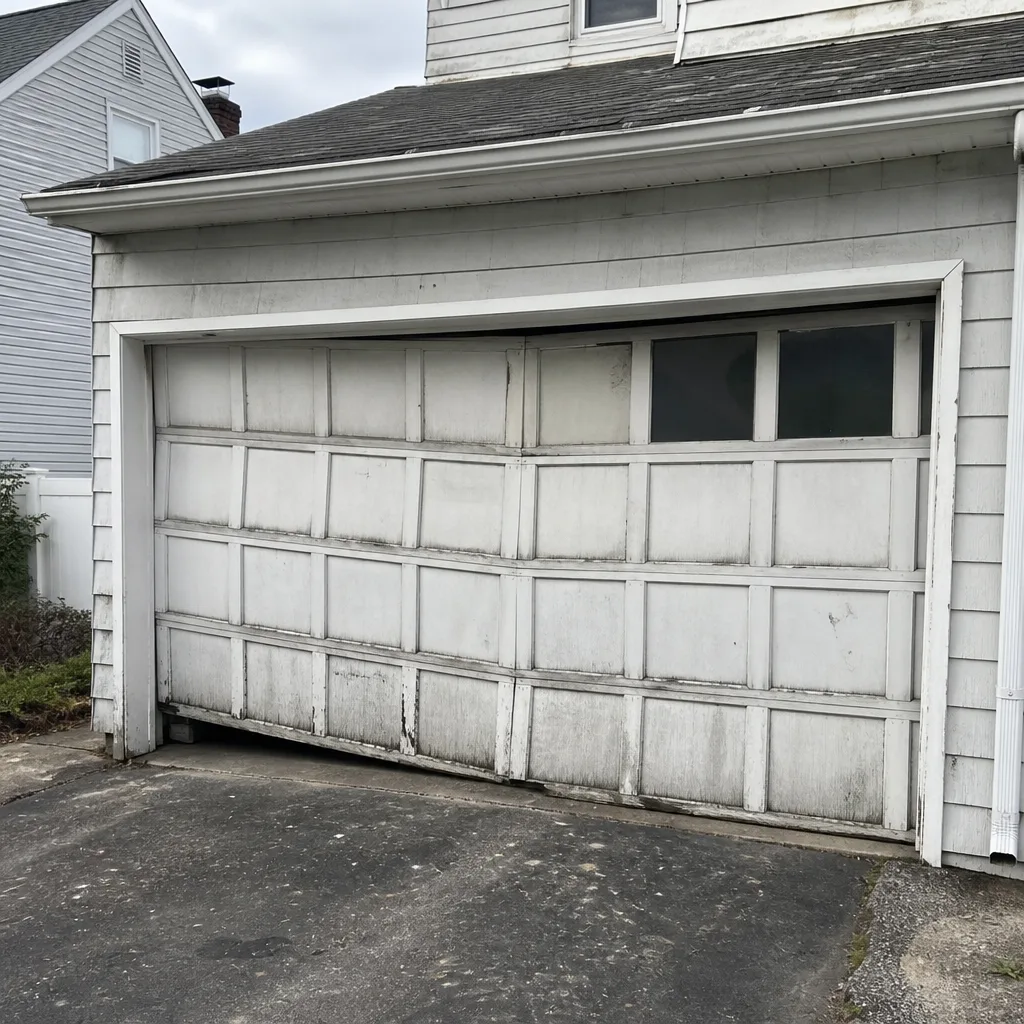 Before
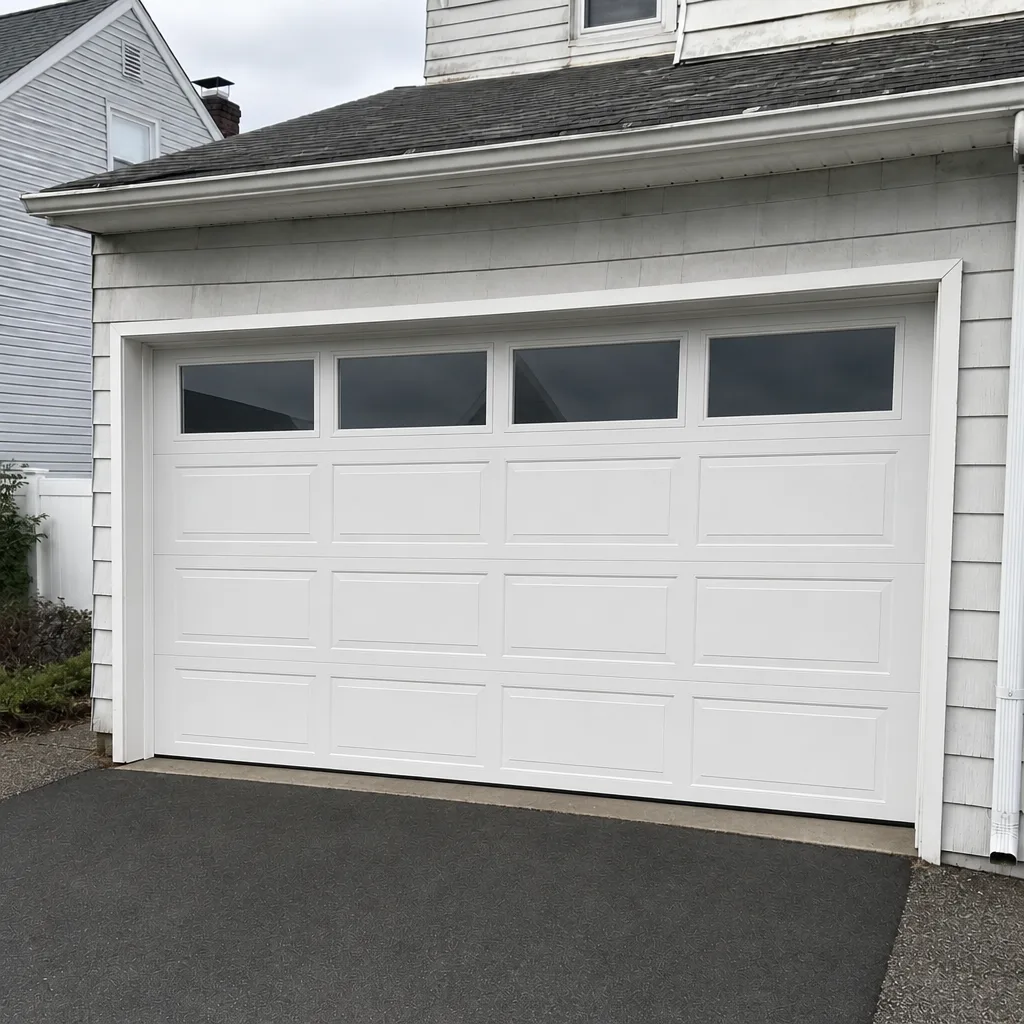 After
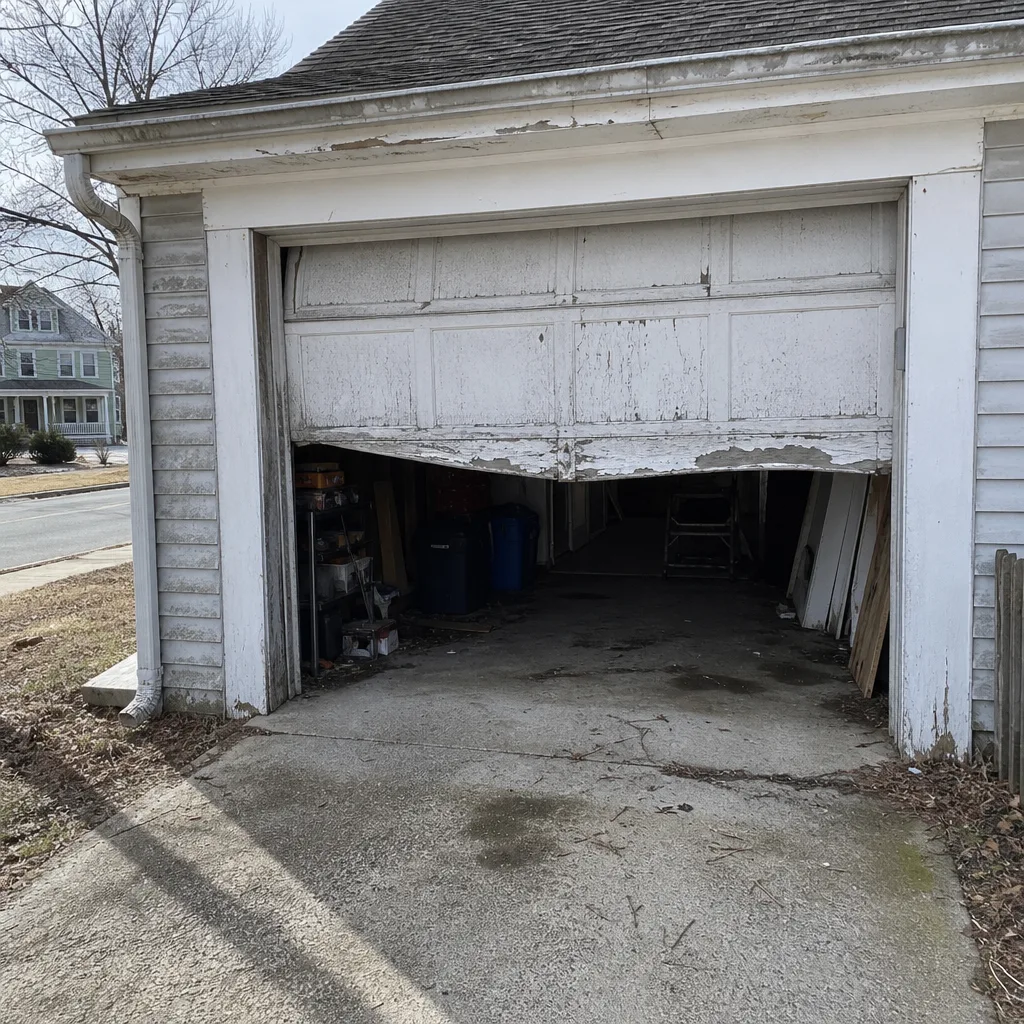 Before
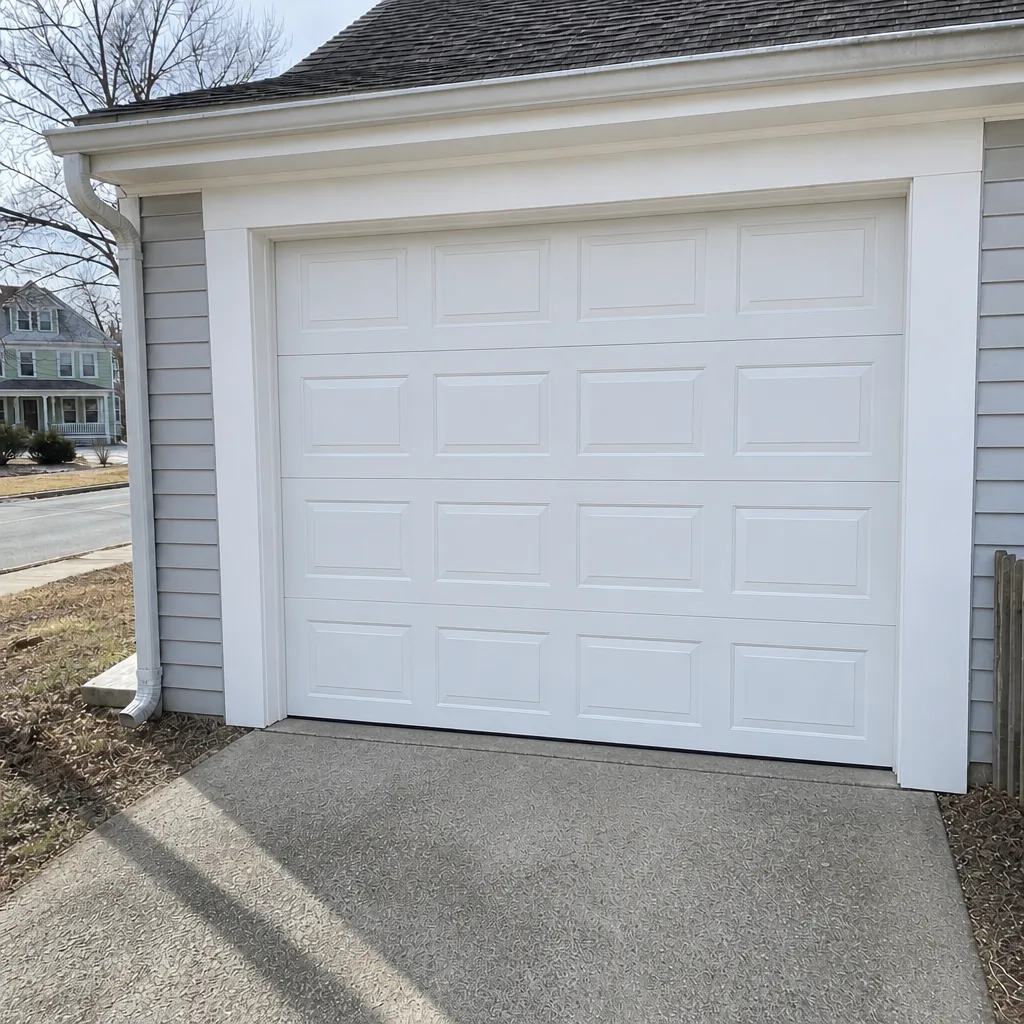 After
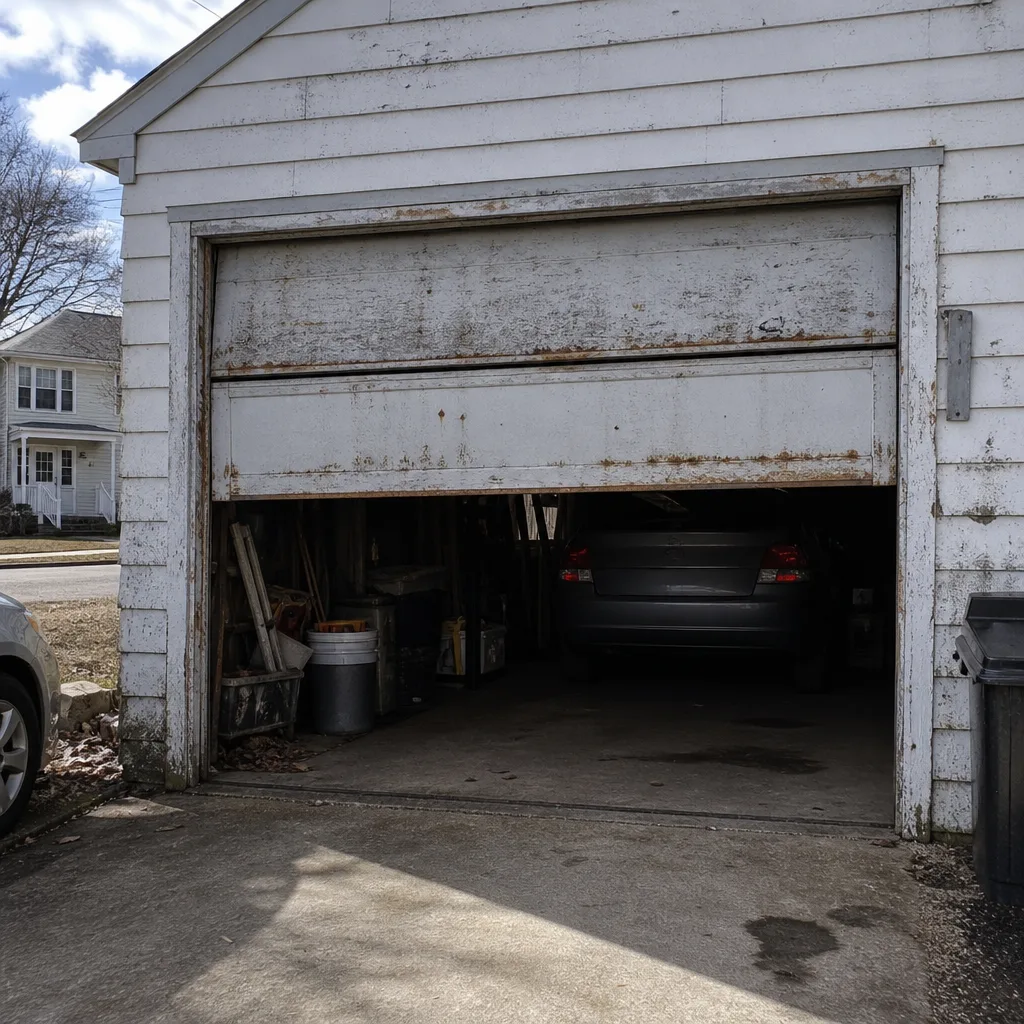 Before
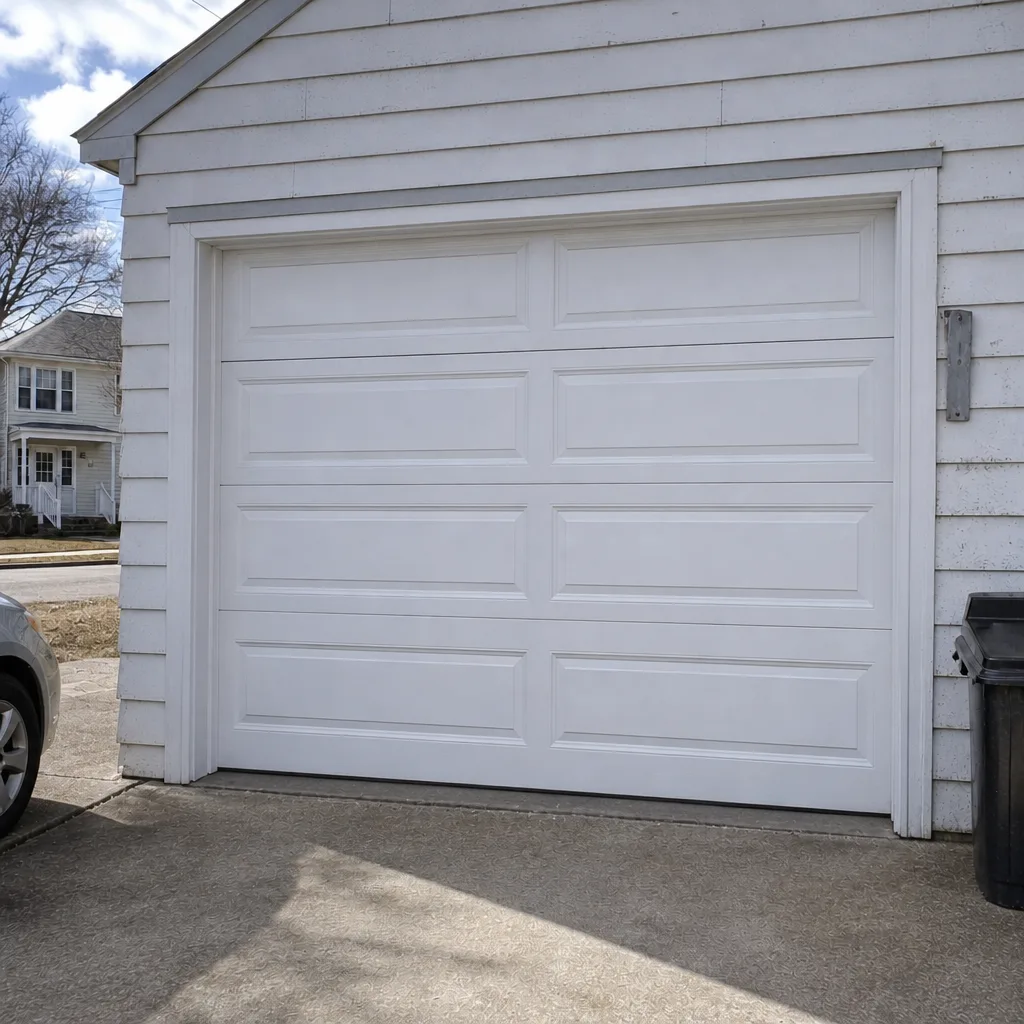 After
When to Call a Professional
Call us when a spring has snapped, when the door is off its track, when a panel is kinked or the door came down hard, or when the opener won’t move the door at all. Call when the door won’t close and you can’t secure it, and call if the safety reverse fails or the door reverses on its own. Any of these is your cue to stop operating the door and get a trained technician out. Fall River Garage Door Repair Co offers free estimates in Fall River, so there’s no reason to guess. Many of these are quick fixes once the right person sees them. Call (866) 819-6714 to get it diagnosed and fixed right the first time.
Frequently Asked Questions
No, you shouldn’t. A door with a broken spring has lost its counterbalance and is far too heavy and unstable to lift safely by hand; forcing it can bend panels and damage cables and tracks. Leave it closed and call for spring service.
Most spring repairs are quoted as a typical range and confirmed in writing before any work starts; a single spring and a matched pair are priced differently, so the estimator will tell you which your door needs. Pricing depends on spring type, door size, and whether anything else was damaged when it broke. Call (866) 819-6714 for a free estimate. The number on your written quote is the price.
Have your door brand, opener make and model, and a plain description of what happened and where the door is now. The more specific you are, the more likely the right parts come on the first trip. We work on eight major brands, including Chamberlain, Genie, and Craftsman.
Check the safety sensors first, since a blocked or misaligned eye makes the door reverse. If it still won’t close, disengage the opener, lower the door by hand, and lock it down with the slide lock or a C-clamp on the track. Then call us.
It depends on whether the damage is cosmetic or structural. If the door runs smoothly and the gaps stay even, it’s usually cosmetic. If the door binds, the tracks are bent, or a panel has a sharp kink, stop using it and have it assessed before running it again.
Very likely. We service LiftMaster, Chamberlain, Genie, Clopay, Amarr, Wayne Dalton, Craftsman, and Raynor equipment, so brand-specific repairs are routine. Mentioning your brand on the call helps us diagnose faster.
The Bottom Line
The key to a garage door emergency in Fall River is knowing the sequence before it happens. Don’t force a door with a broken spring. Disengage the opener safely and get the car out. Secure an open door with a lock or a clamp while you wait. Tell us the brand and model when you call so the right parts come first. And do the monthly checks: the door you maintain is the one that doesn’t strand you on a cold morning. Our technicians have up to 11 years of experience, we handle the full door system, and emergency service is available for the situations that are a genuine safety or security concern.
When something goes wrong, don’t guess. Call Fall River Garage Door Repair Co at (866) 819-6714 for a free estimate and same-day service where it’s a safety emergency. One call covers the whole door.
Written by the team at Fall River Garage Door Repair Co.